
We tuft carved rugs flat on the bench — 1200–2800 GSM, cotton or wool lines.
A distinct programme from our 2000–3500 GSM hand-tufted line: bench-tufted flat across a table rather than gun-tufted upright, carved in relief after the pile is set, and finished without a latex backing. Cotton and wool run as separate lines at 1200–2800 GSM, sized from doormats through to full-size room rugs.
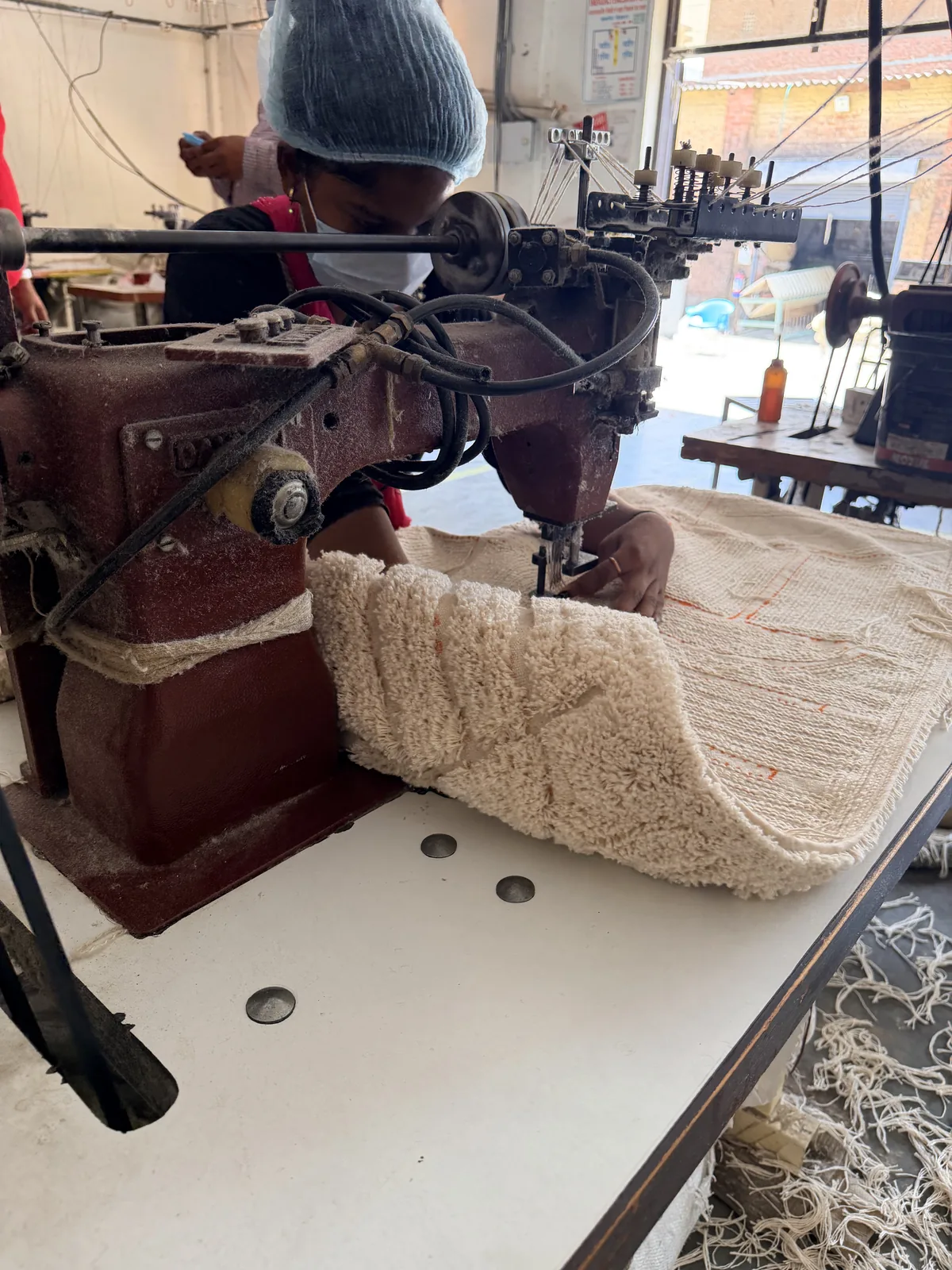
Bench-tufted, carved, unbacked
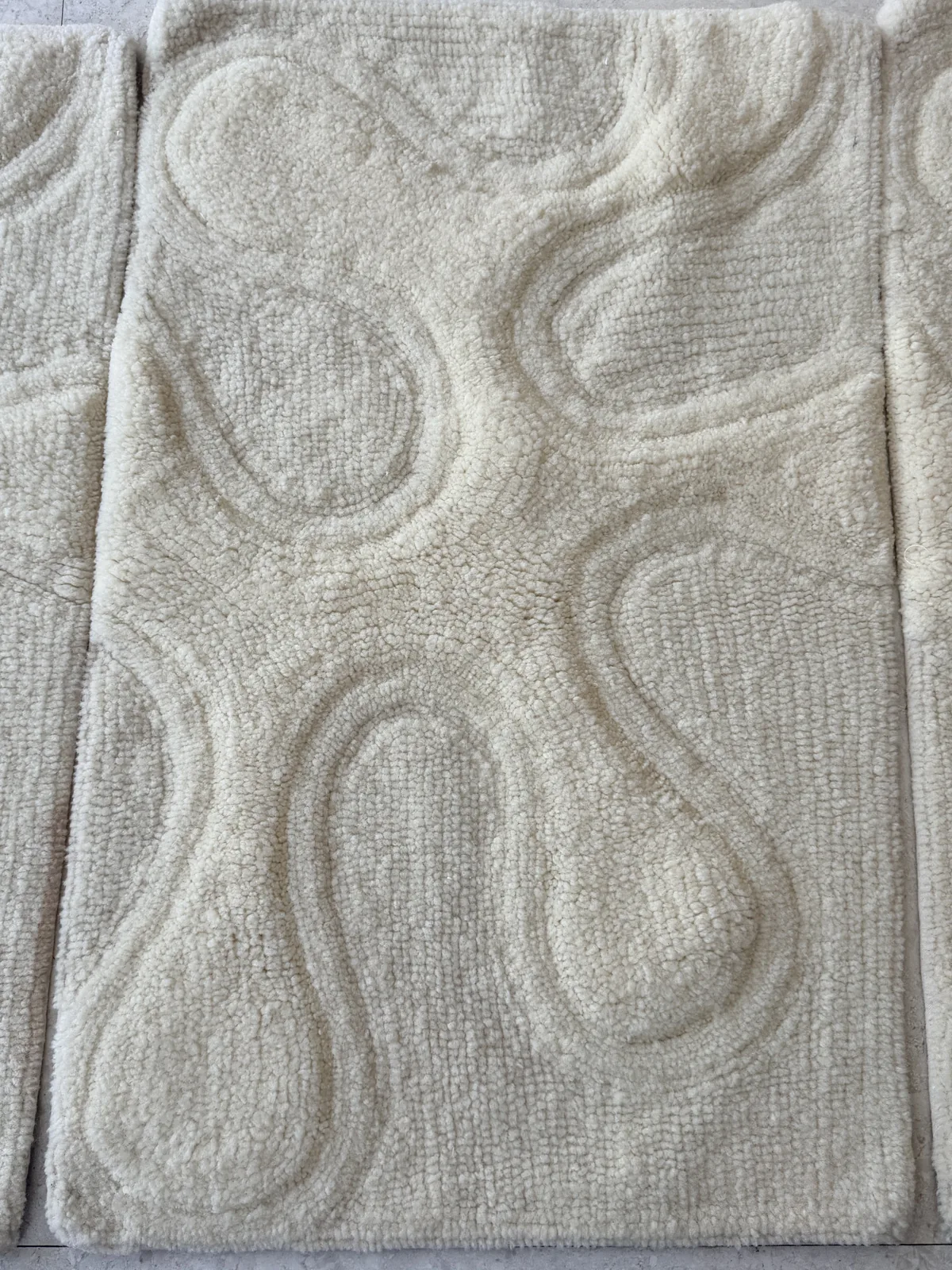
Three things separate this construction from our latex-backed hand-tufted programme. First, the rug is tufted flat across a bench-mounted machine rather than punched upright through a stretched frame — a different working posture that changes tension on the primary canvas and the tufter’s line of sight into the design. Second, the pile is left slightly overheight during tufting and then carved by hand into the relief pattern after the piece comes off the bench — the depth of the carve is what reads across the surface, not the pile alone. Third, no latex layer is applied at finishing: the tufts are held in place by the density of the construction and the tension of the yarn.
Weight sits in the 1200–2800 GSM band — lighter than the 2000–3500 GSM hand-tufted programme.
- 1200–2800 GSM
- Bench-tufted
- Carved relief
- No latex backing
For our 2000–3500 GSM latex-backed hand-tufted line, see hand-tufted rugs →
Before the bench: the design goes onto the backing
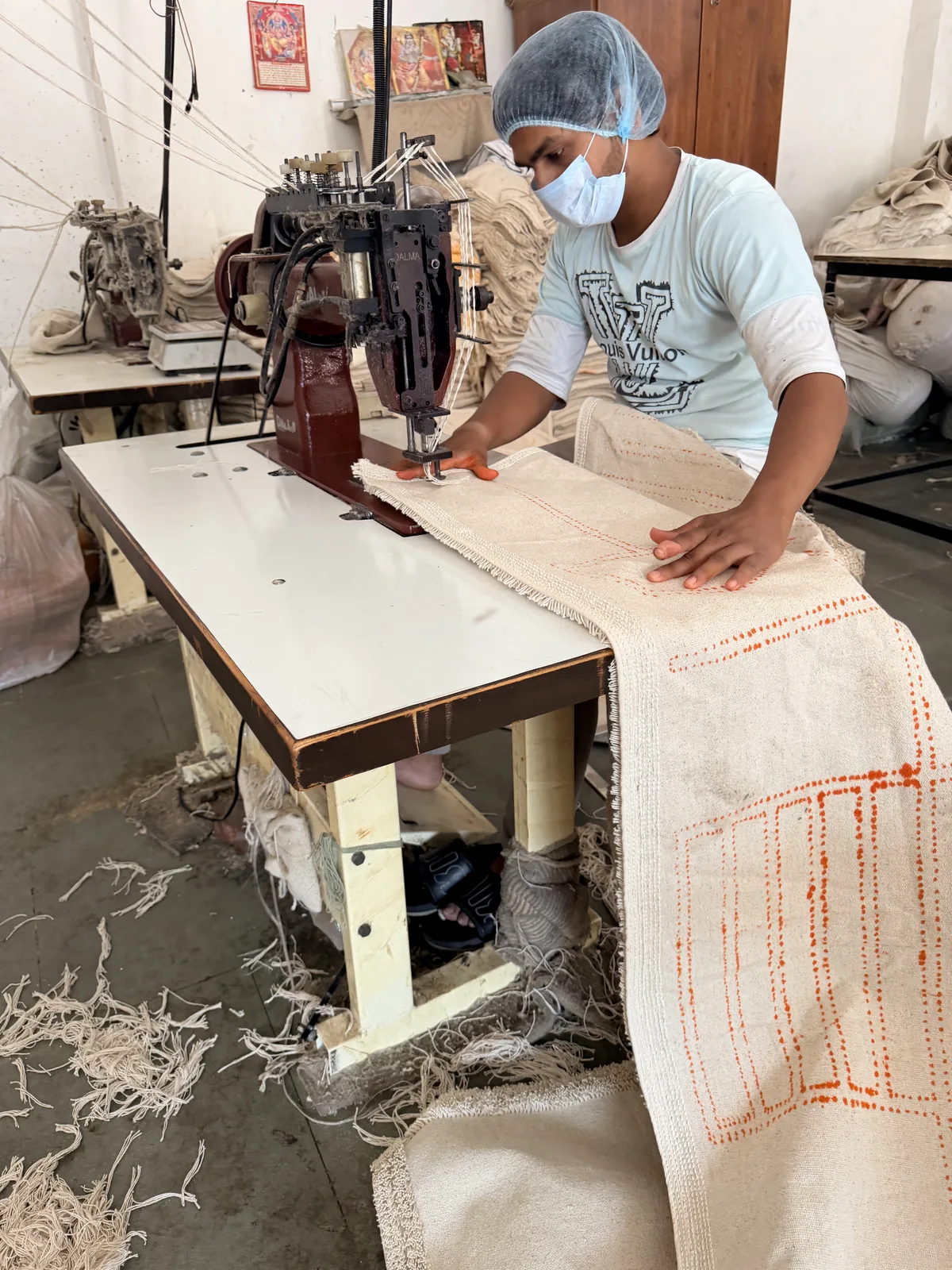
Every carved piece starts with an outline. The design is traced onto the primary cotton backing in a bright marker — deep enough that the tufter following the machine head can read it through the feed, precise enough that a competent finisher can carve to it later without guessing the intended edge. On production runs, the same marked backing is reused as the reference the QC bench compares finished pieces against.
The design range
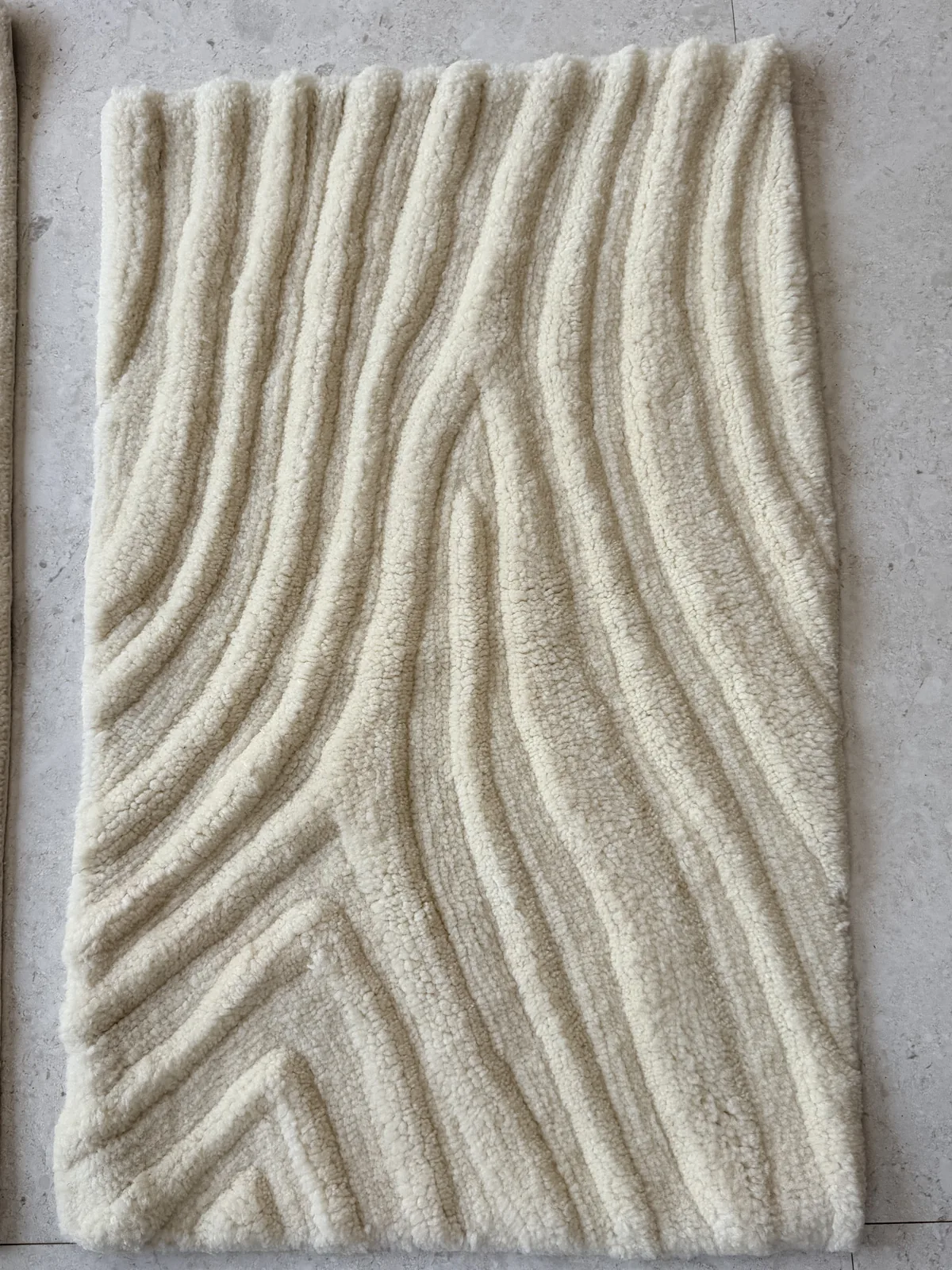
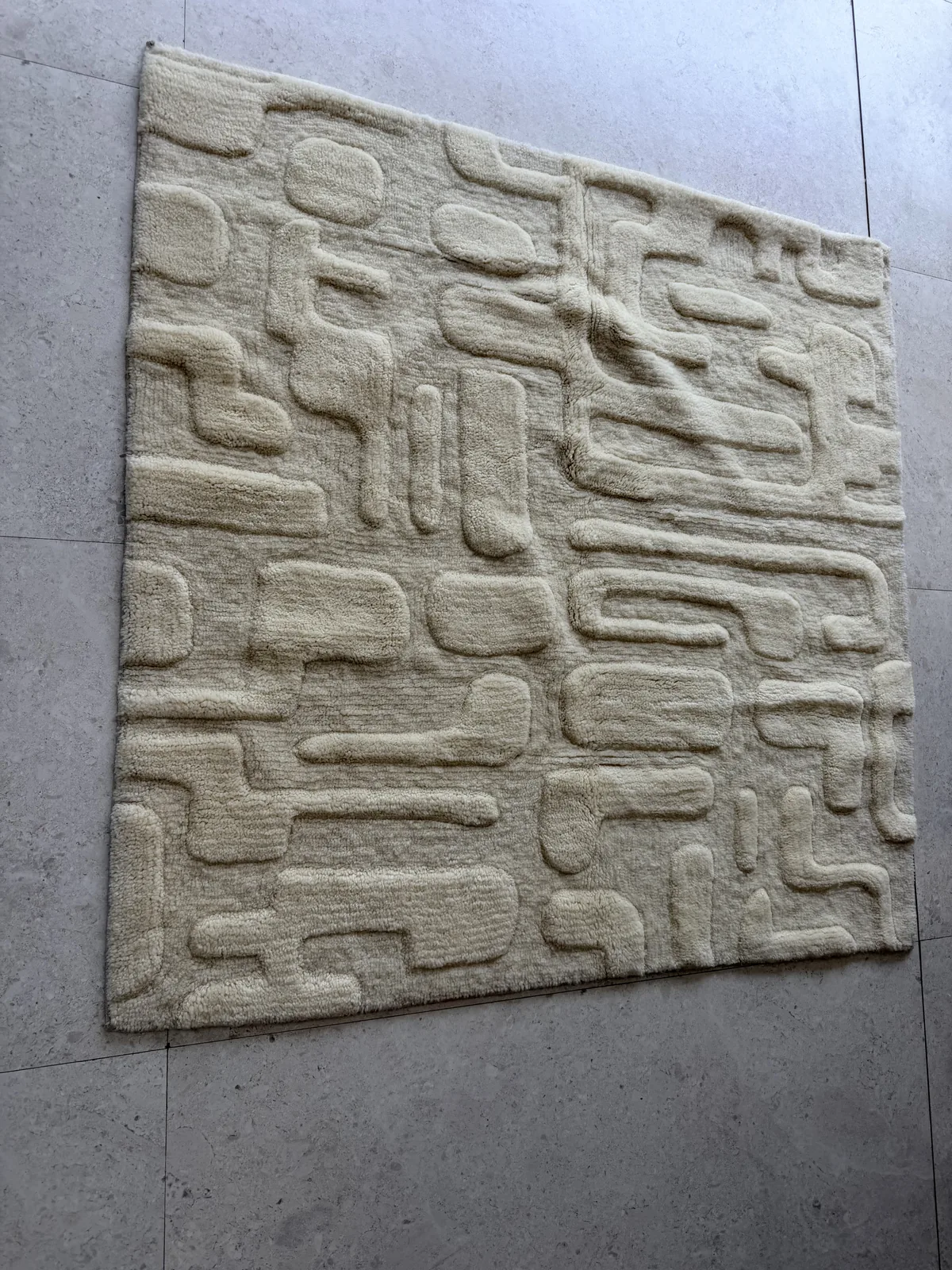
Because the design is cut into the pile after tufting — rather than woven or knotted into the structure — the vocabulary is what a good hand and a long-blade shear can shape. That covers a wide range: flowing curves, waves and organic contours as readily as strict geometry and interlocking shapes. And the reading shifts with the light. A raking side light picks out shadows the design casts across itself; overhead light flattens the same rug to its colour field. Buyers specifying carved rugs for a room should think about the light before the design.
The same construction handles very different design languages. A wave-relief in an entrance mat and an interlocking geometric relief in a full-size floor rug are the same programme — the difference is what the finisher cuts.
Cotton and wool, offered as separate lines
Cotton and wool run as two distinct programmes on this bench — not as a material choice within one line. Buyers pick one at enquiry: cotton for lighter, cooler-handed pieces with a matte surface; wool for the traditional pile depth and the way the fibre holds a shear line under hand-carving. Each runs through the same bench-tufting and carving operations, with its own dye-house routing and yarn preparation.
Sizes, MOQ, lead time
Sizes run from doormats through to full-size room rugs. The minimum order per design is ten pieces. Lead time from purchase order to shipment-ready is 45–60 days, depending on size, colour count and carve complexity — smaller pieces with simpler carving sit at the shorter end; full-size room rugs with dense relief work at the longer end.
- MOQ: 10 pieces
- Sizes: doormat to full-size
- Lead time: 45–60 days
Quality gates
Three checks travel with every piece. Full-piece GSM verification at final QC — the specified weight has to match actual pile weight divided by actual pile area. Carve depth is compared against the buyer-approved strike-off; the outline width and the depth into the pile are the two variables a competent finisher can vary against the reference. And the backing bond is checked without a latex layer to lean on — the tufts have to hold from the construction alone, and any piece with tuft-loosening is rejected at final QC.
Every piece ships with certifications on file: GoodWeave (child-labour-free supply chain), OEKO-TEX Standard 100 (tested against limit values for restricted substances), and ISO 9001 (documented quality management).
Frequently asked
What is a carved bench-tufted rug?
A carved bench-tufted rug is tufted flat across a bench-mounted machine, then hand-carved after the pile has been set — the design is cut into a level pile rather than woven or knotted into the construction. PiHue’s line runs at 1200–2800 GSM in cotton or wool lines, without a latex backing.
How is this line different from your hand-tufted programme?
Three ways. This line is bench-tufted, not gun-tufted upright on a stretched frame. It runs lighter (1200–2800 GSM) than the 2000–3500 GSM hand-tufted line. And it has no latex backing. Different construction, different weight, different buyer. For the fuller-weight, latex-backed programme, see hand-tufted rugs.
What is the MOQ and lead time?
Ten pieces per design, 45–60 days from purchase order to shipment-ready. Sizes range from doormats through to full-size room rugs.
See also
- Hand-tufted rugs — the 2000–3500 GSM latex-backed programme
- Carving and shearing — how the finishing floor cuts the relief
- Rug washing and finishing — the wider finishing bay
- Craft hub — all constructions and fibres
Want a carved-rug programme?
Send designs and GSM targets. We return quotation, material recommendation and sampling plan the same working day.