
No pile, no latex — the design is the structure.
Flatweaves — dhurries and kilims — are woven flat on the loom. Light, durable, often reversible, and the natural construction for recycled-fibre programmes.
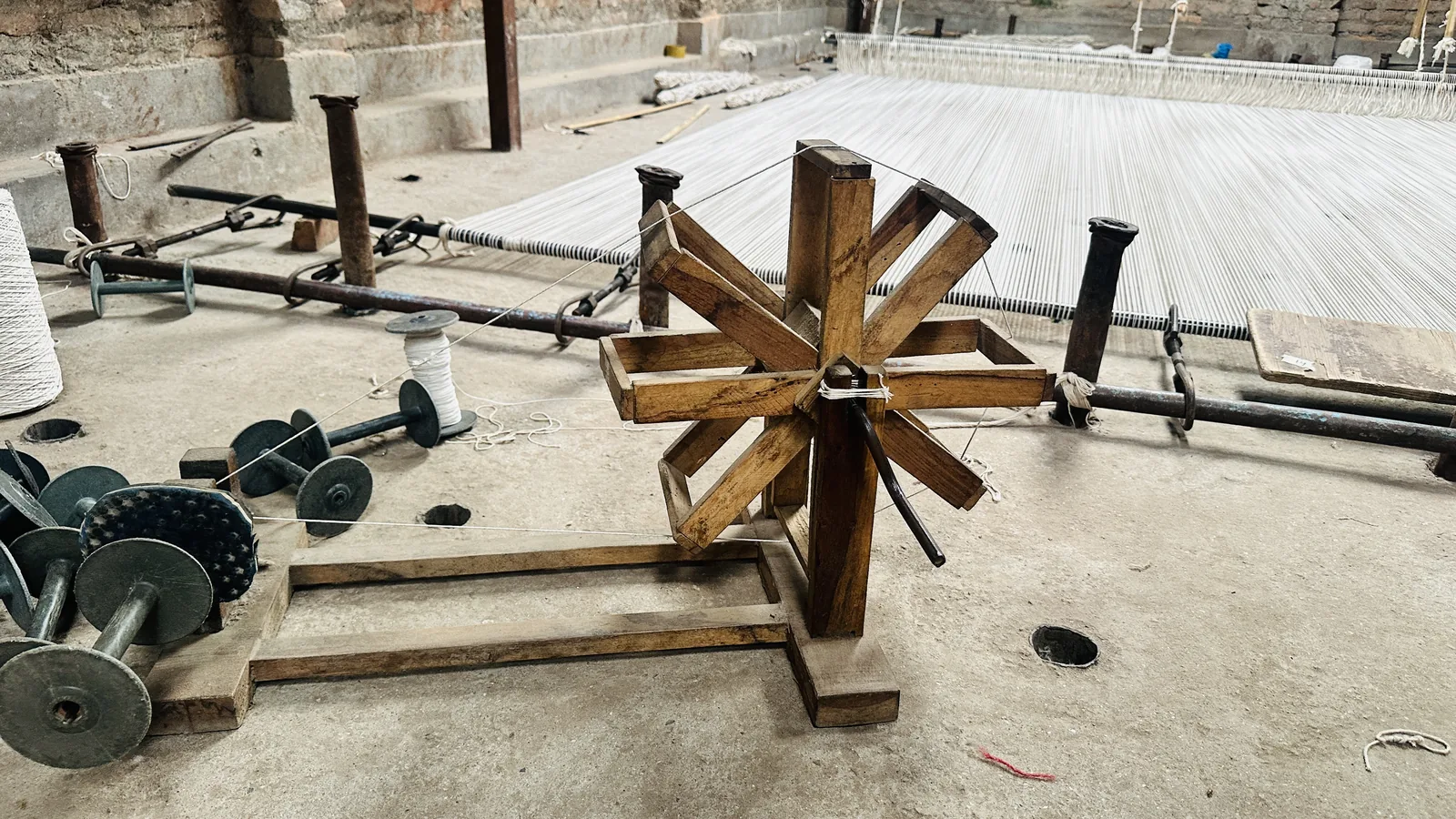
How the construction works
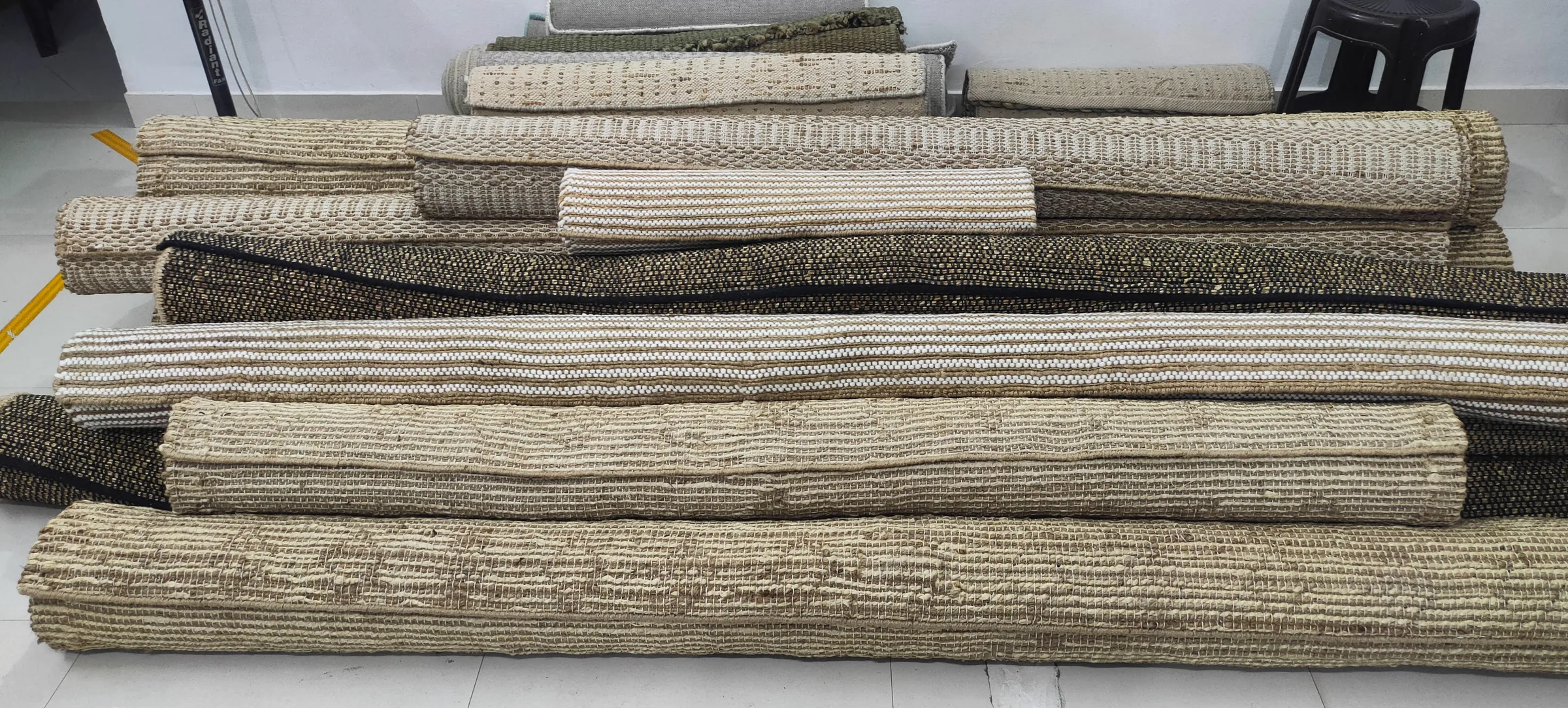
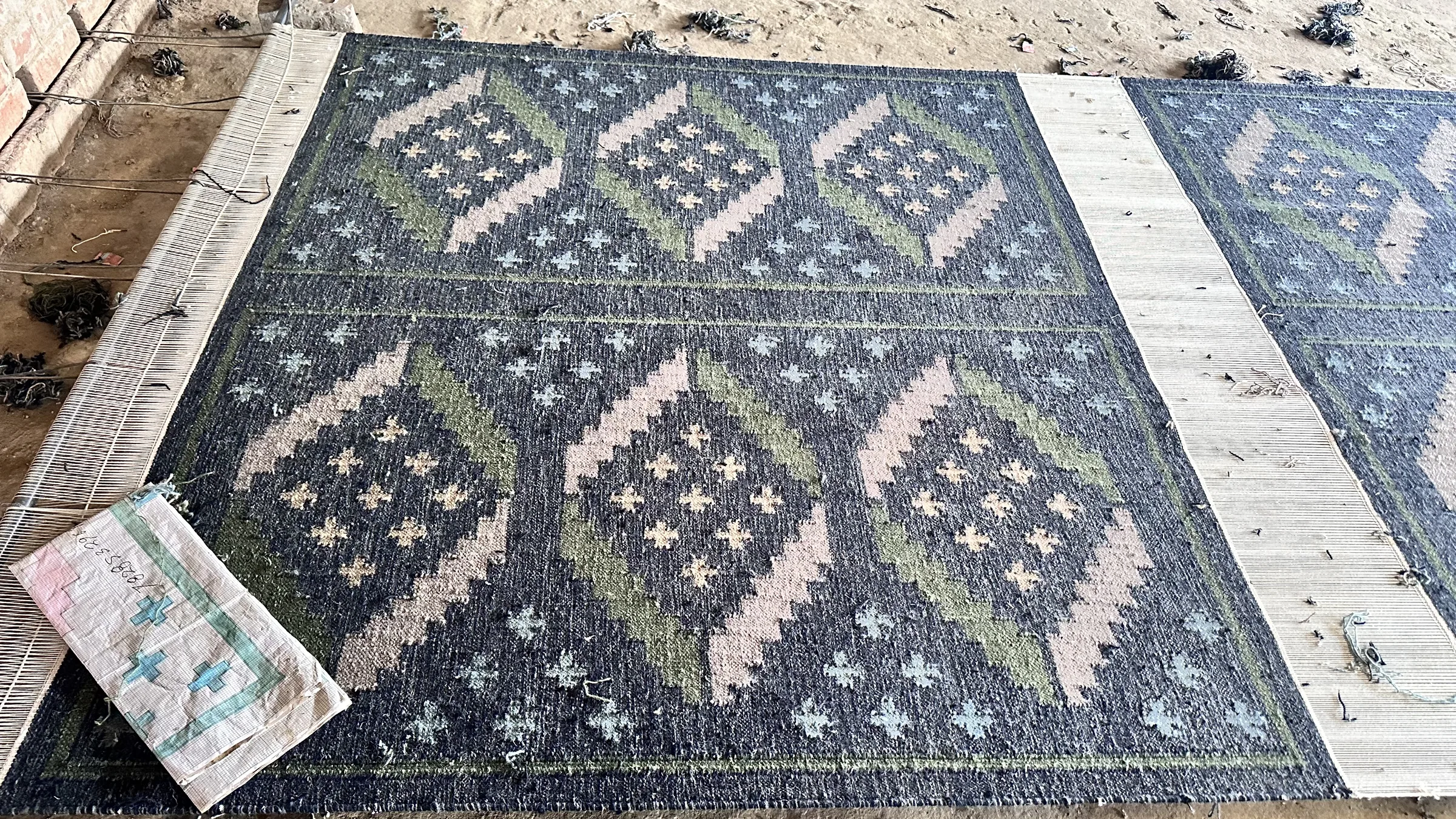
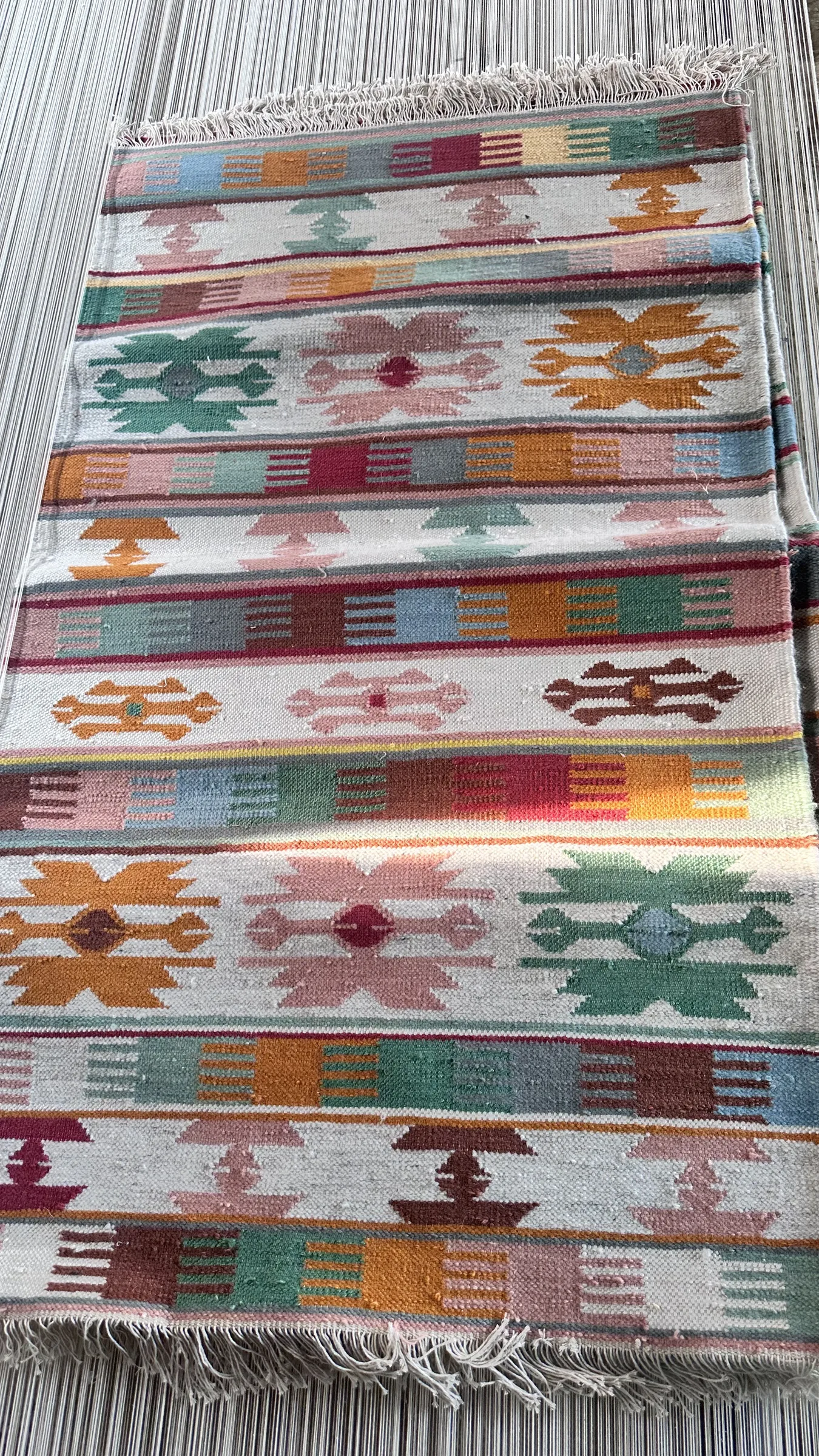
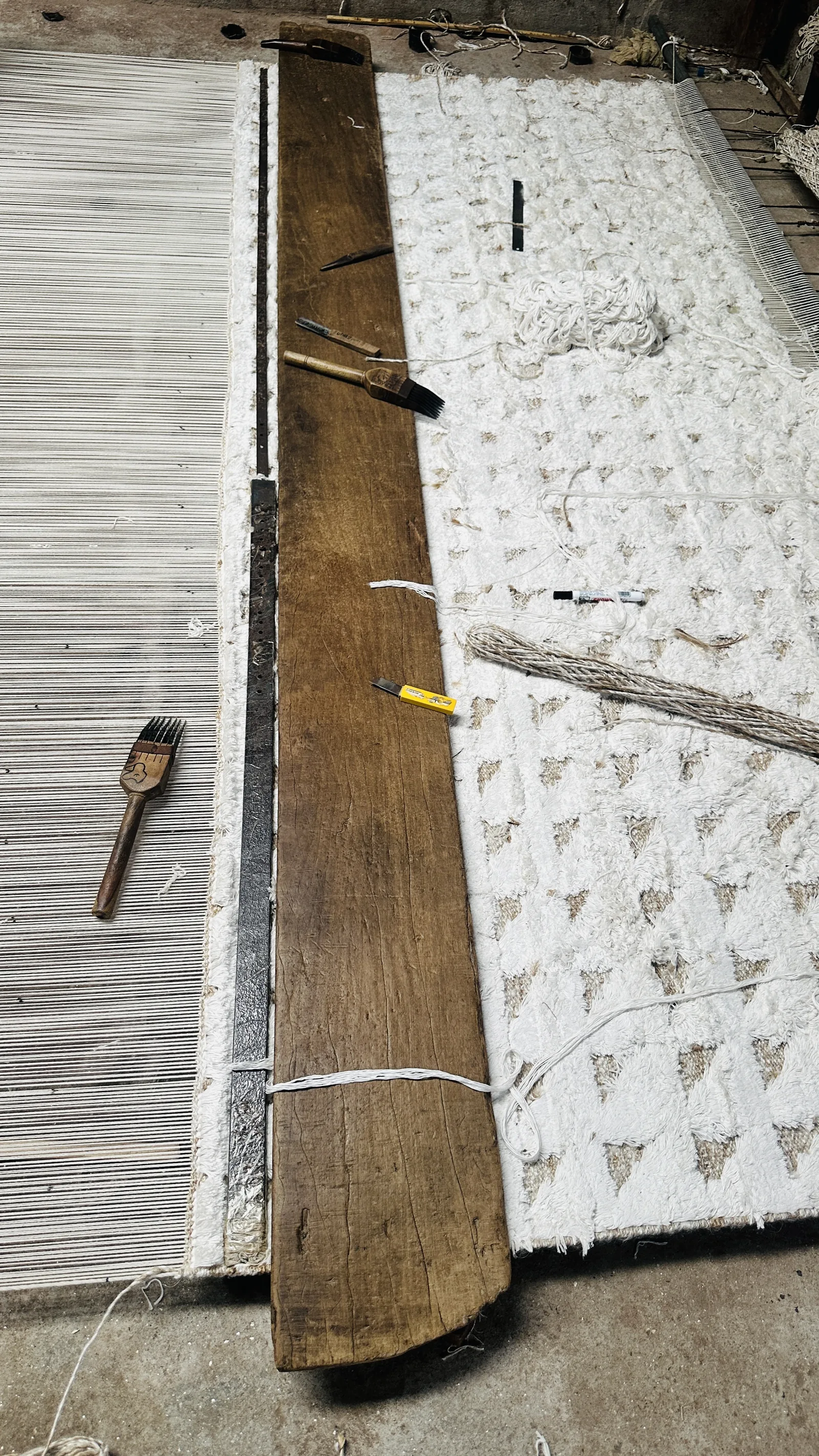
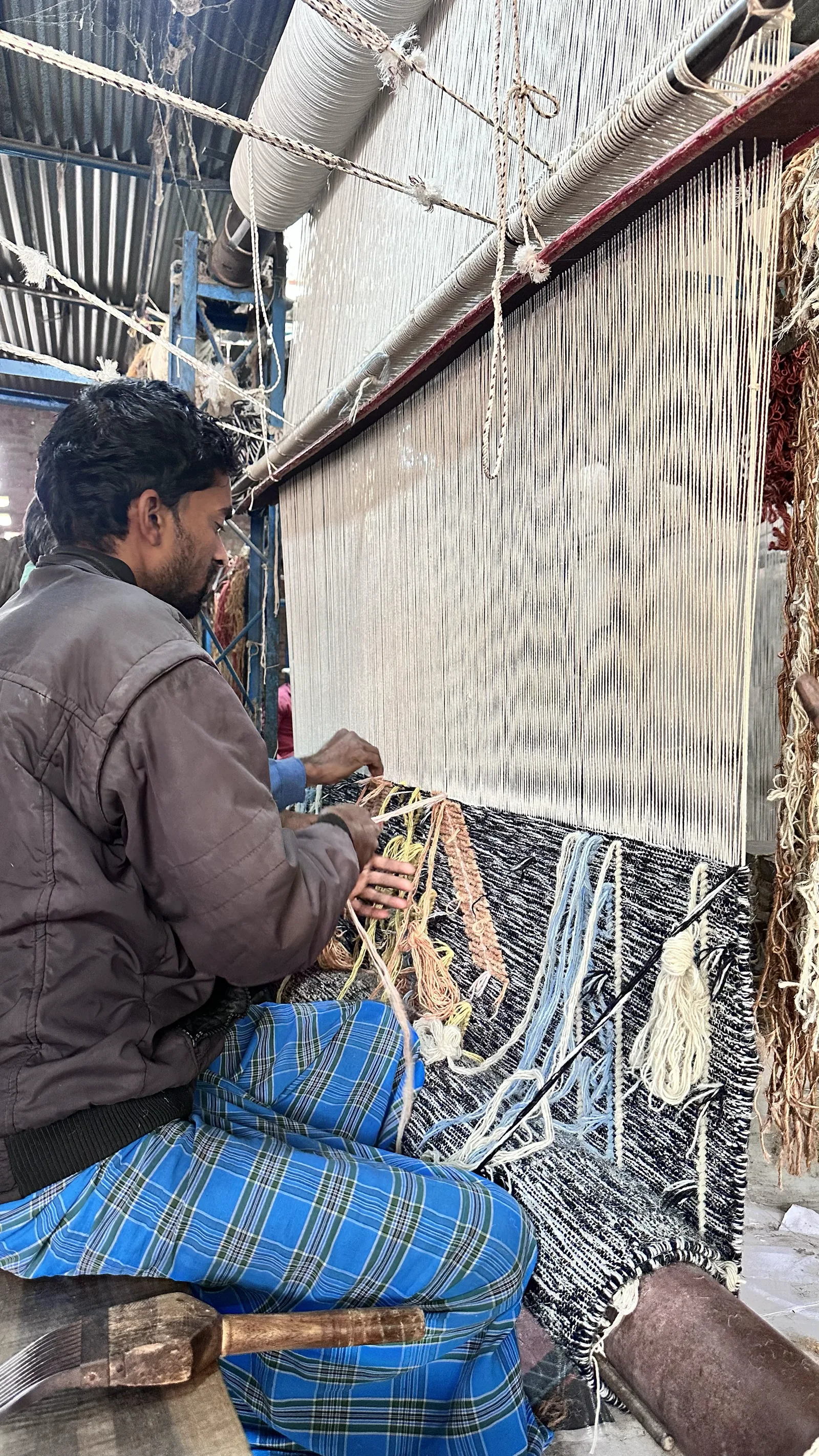
Warp threads are strung on the loom; weft yarns of different colours are interlaced with the warp to build the pattern directly. Because pile is not added, both sides of the finished rug are usable — flatweaves are typically reversible. Constructions include panja dhurrie, warp-faced kilim, and slit-weave designs where colour blocks meet.
- Reversible
- Wool, jute, recycled PET
- Kilim · dhurrie
- GRS-friendly
Where flatweave belongs
- Recycled-fibre and natural-fibre programmes (GRS-certified recycled PET, wool-jute, cotton).
- Mid-traffic living areas and workspaces where a low-profile, cleanable rug is preferred.
- Coastal, rustic and biophilic schemes.
- Kids' spaces and layering — light enough to lift and beat out.

Frequently asked
What is a flatweave rug?
A flatweave rug has no pile — the design lives entirely in the interlaced warp and weft. Dhurries (Indian) and kilims (Turkish/Central Asian) are the classic flatweaves; both are woven flat, both are typically reversible, and both are naturally suited to recycled-fibre and natural-fibre programmes.
Are flatweave rugs durable?
Yes — often more durable than tufted work of similar price, because there is no latex layer to age. A well-made wool flatweave in a mid-traffic area lasts decades.
Can flatweaves be made from recycled materials?
Yes. Flatweave is the natural construction for GRS-certified recycled PET yarn programmes — the yarn spins well, weaves flat, and delivers a durable, cleanable rug from what would otherwise be plastic bottles.
Further reading on pihue.com
Send us your design. Quotation within hours.
A CAD, a sketch or a reference photo is enough — we return pricing, material options and a sampling plan the same working day.