
Machine-sheared to level. Hand-carved to lift.
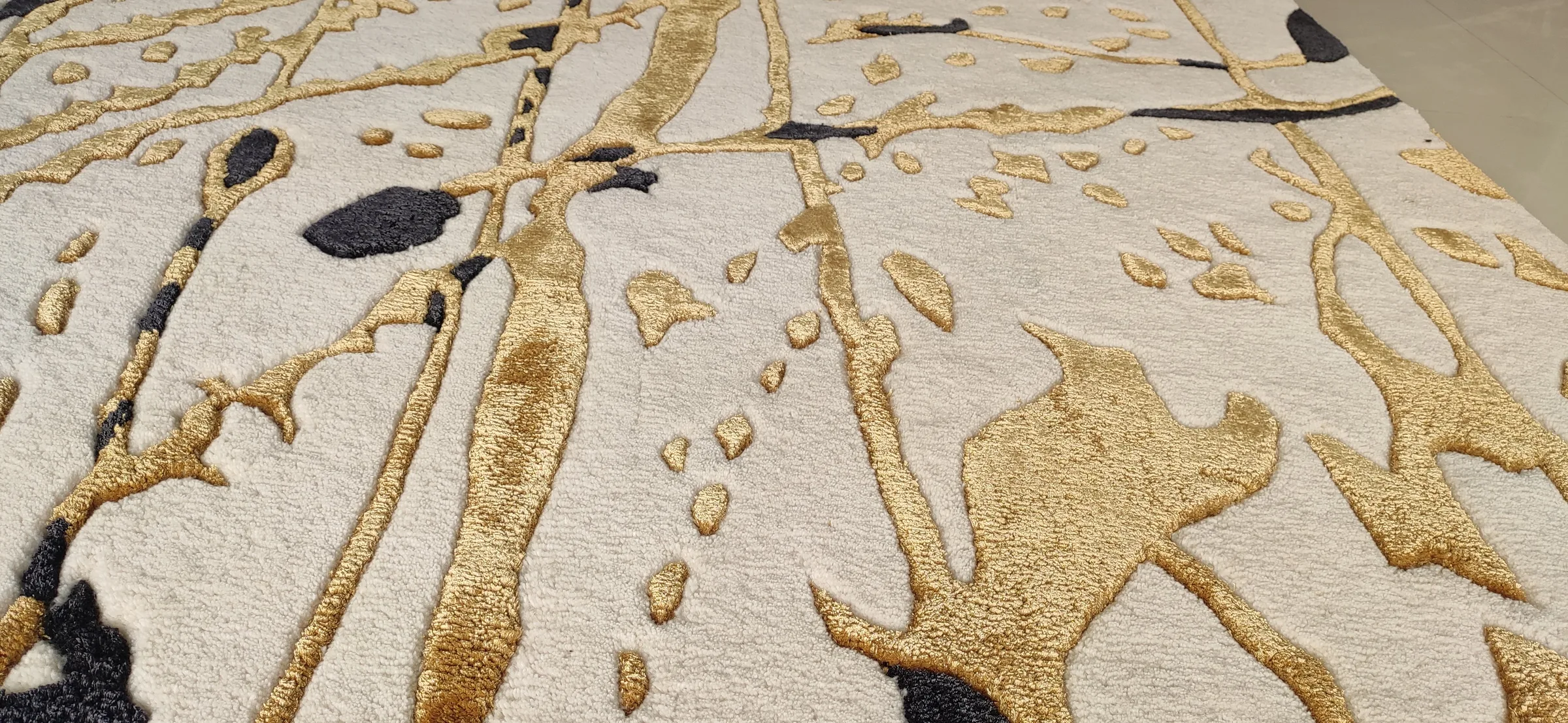
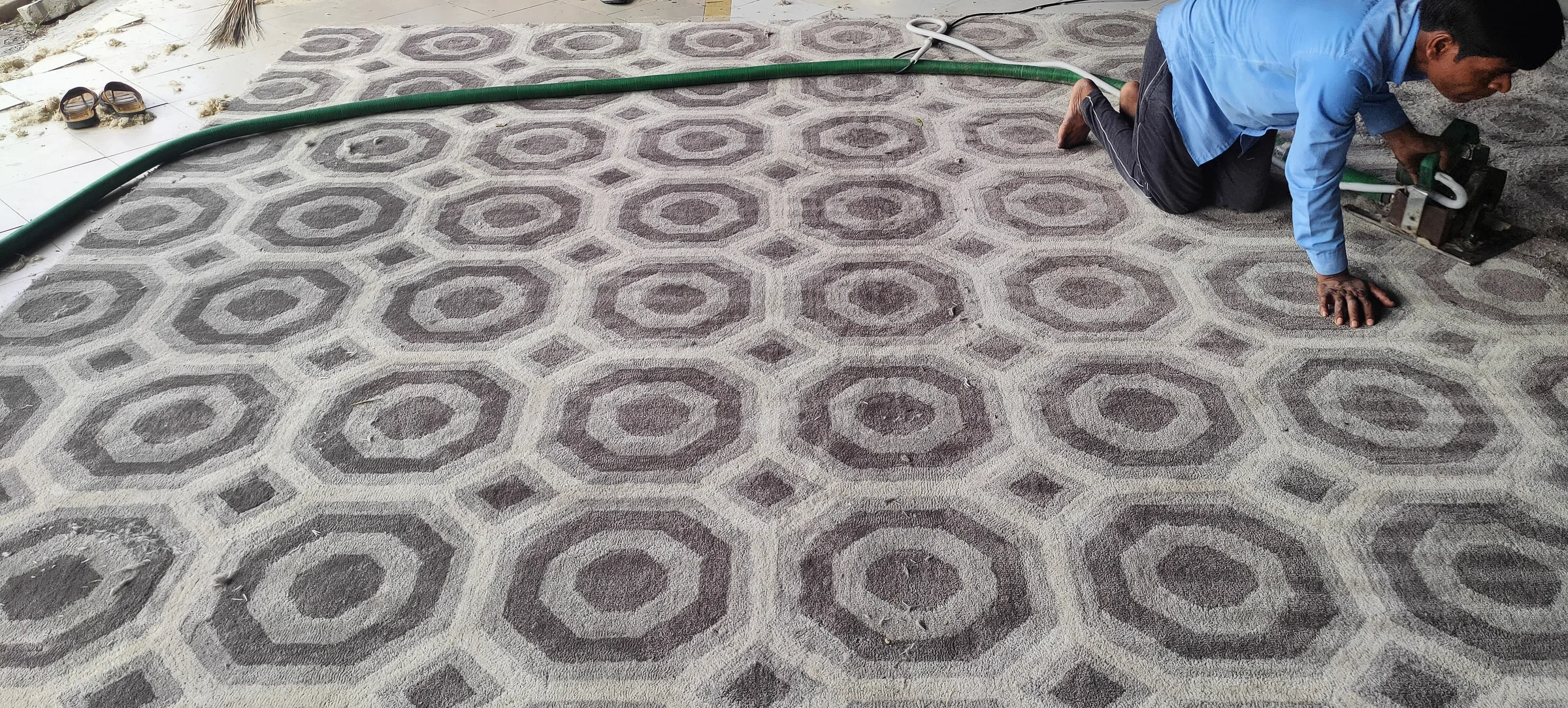
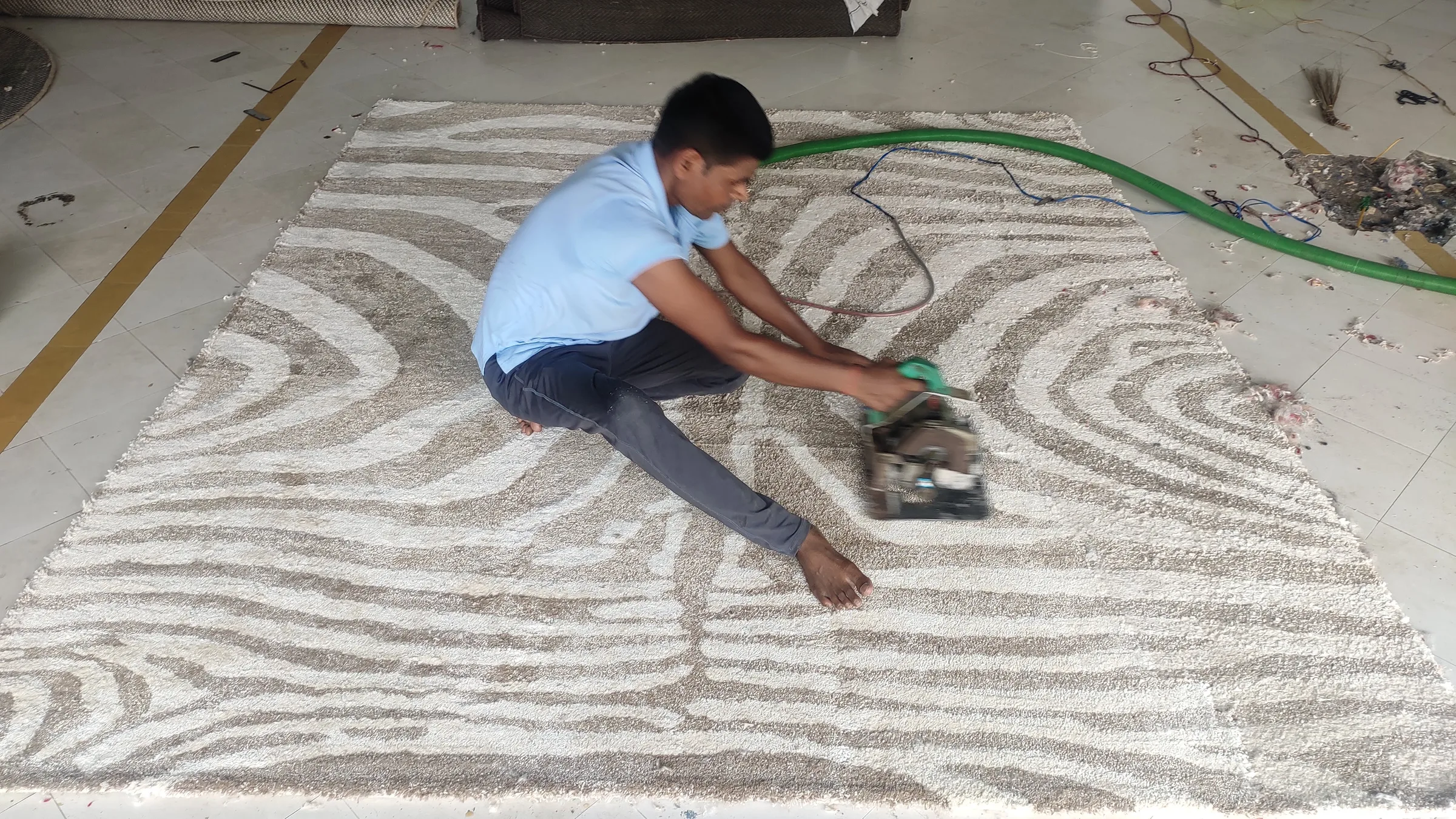
Every carved edge on every PiHue rug is cut by hand with long-blade shears. Mechanical shearing levels the pile first; hand-carving adds the relief that reads as depth.
What is rug carving?
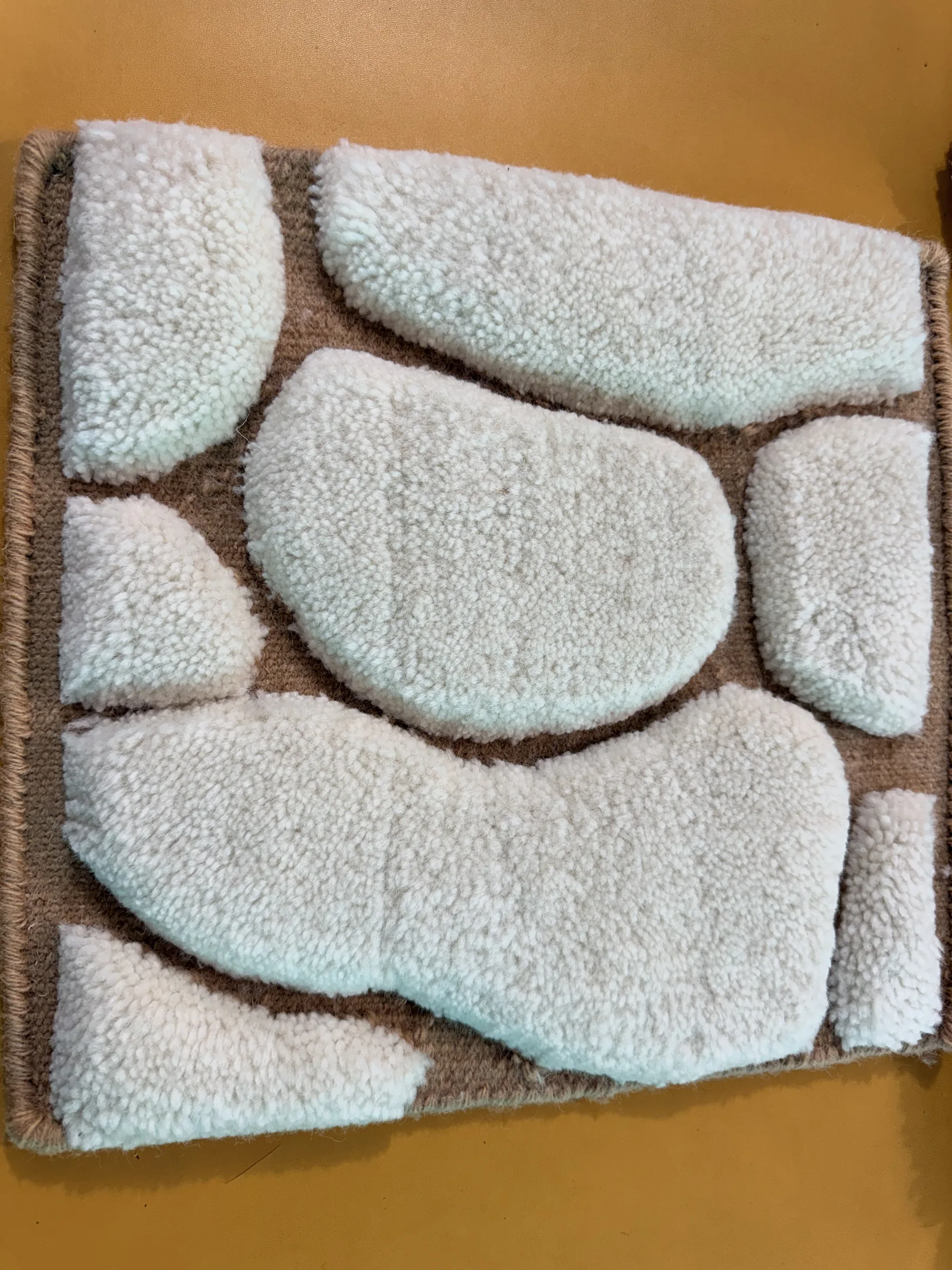
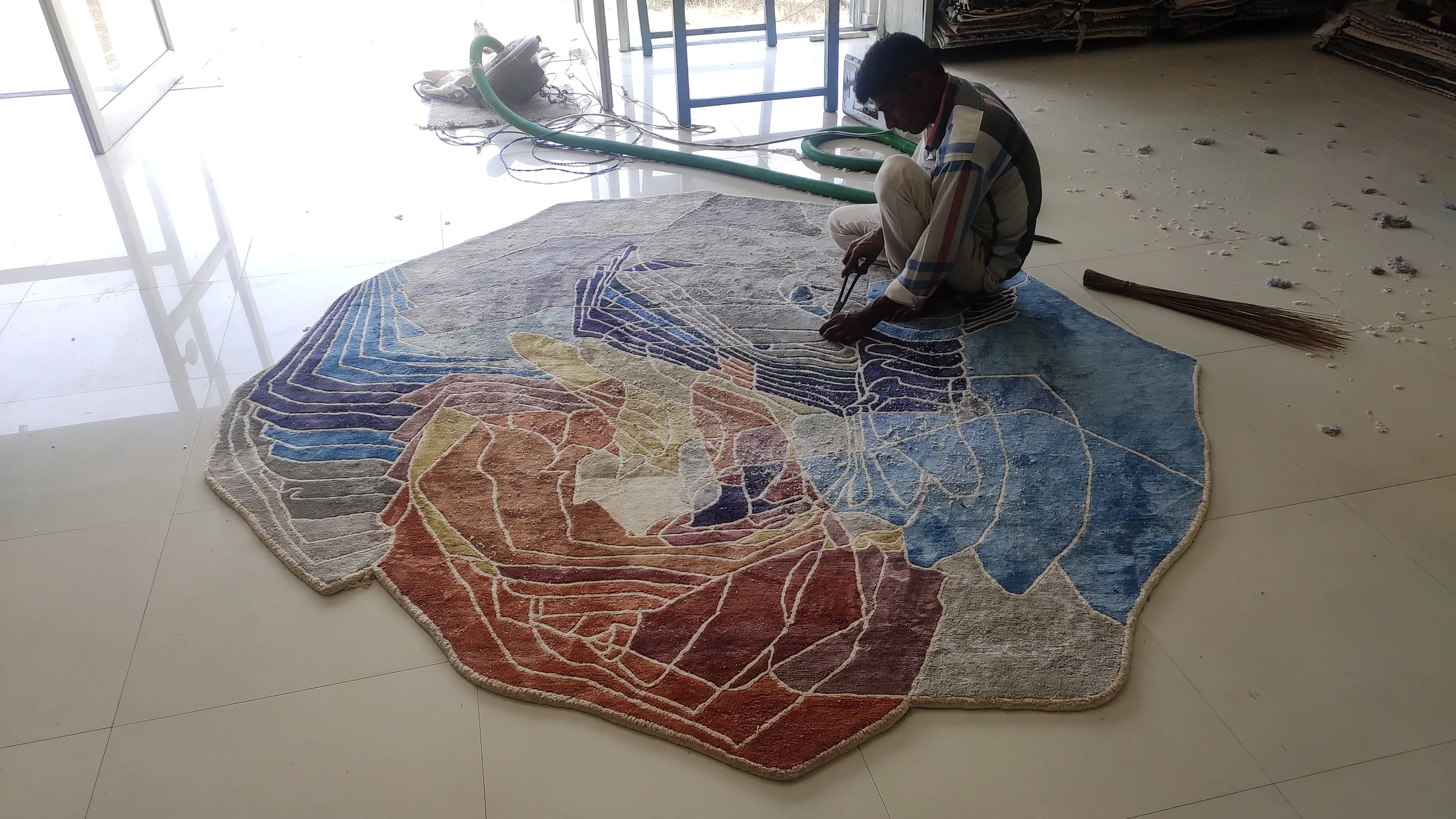
Rug carving is the hand-shearing that follows the pile into three dimensions — a level pile is cut back along the outline of the design so that motifs stand slightly proud of their background, and the reader can feel the pattern with a hand run across the surface. Every carved edge on every rug that leaves PiHue is cut by hand with long-blade shears, one line at a time, by finishers who have carved for years. Machine bevelling exists in the industry; we do not use it, because a machine bevel reads the same on every rug and the whole point of hand-carving is that a competent finisher can vary the depth to suit the design.
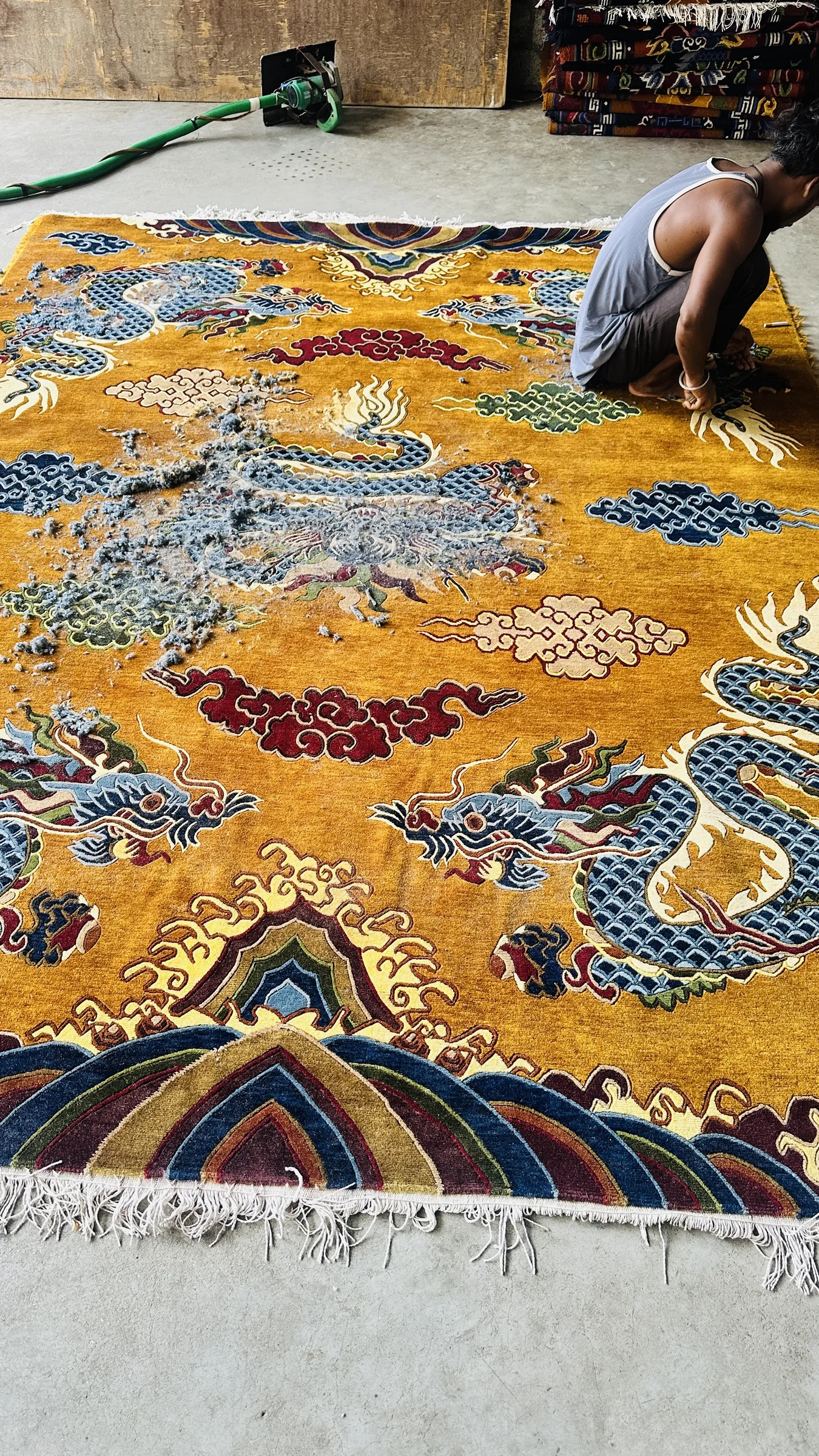
Carving is a finishing operation, not a weaving one — it happens after the pile has been washed, dried and levelled by mechanical shearing to the specified pile height. What carving adds is depth: a levelled pile is a two-dimensional field, and a carved pile has relief. On a busy floral design the difference is subtle; on a Chinese-style temple design it is the design.
Which constructions can be carved?
Hand-tufted rugs carve most naturally because the pile is deep and the yarn count is high enough that a shear line reads cleanly. PiHue's tufted programmes typically ship at 2000–3500 GSM (see the hand-tufted page), and carving is offered as a routine option on any tufted design where the artwork calls for it.
Hand-knotted rugs can be carved too, and often are on traditional Chinese and Persian programmes, but the pile is usually shorter and the carving reads as a fine relief rather than the deeper cut of a tufted rug. Handloom and flatweave rugs are not carved — their structure has no pile depth to work with.
How is a rug prepared for carving?
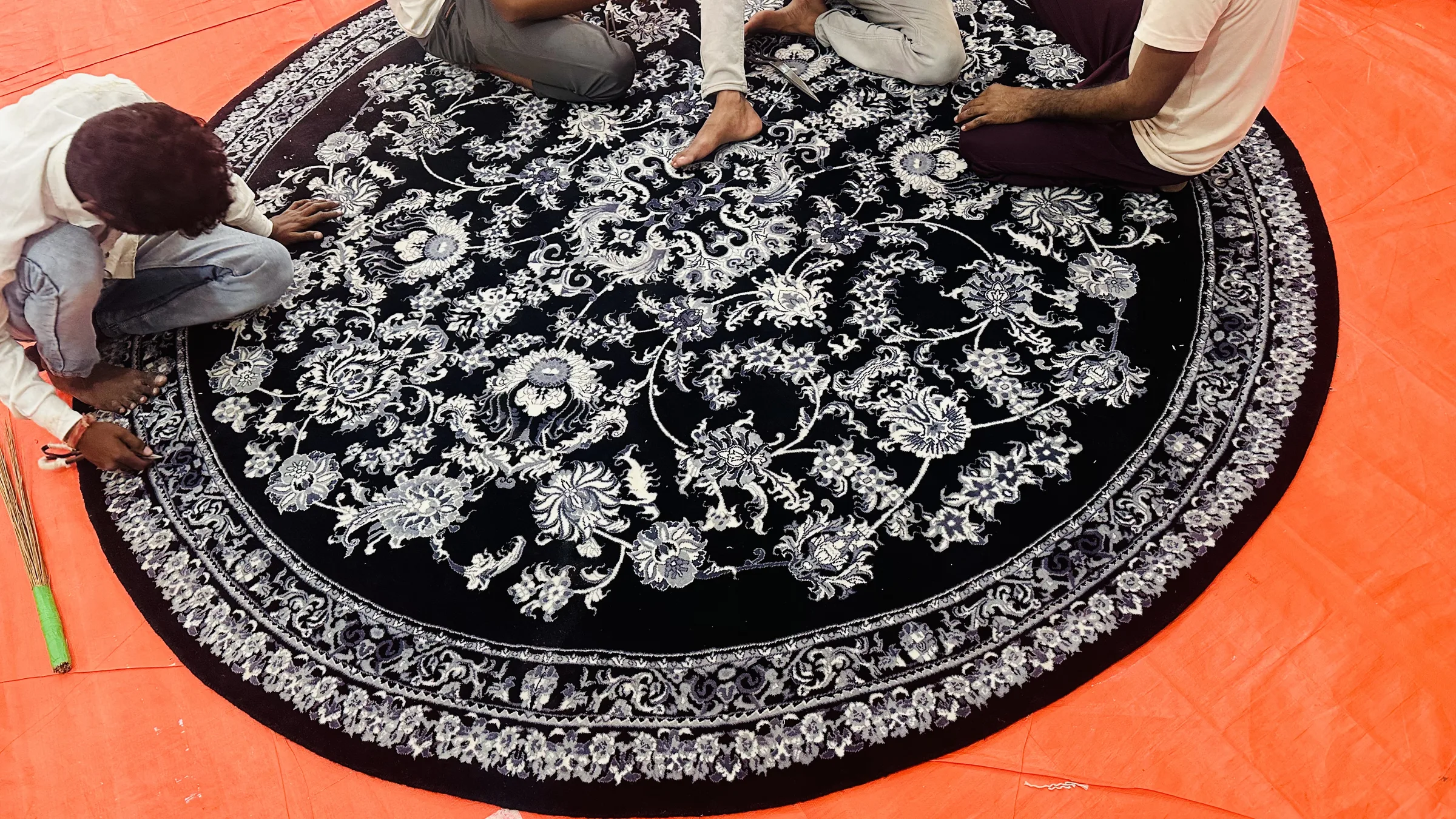
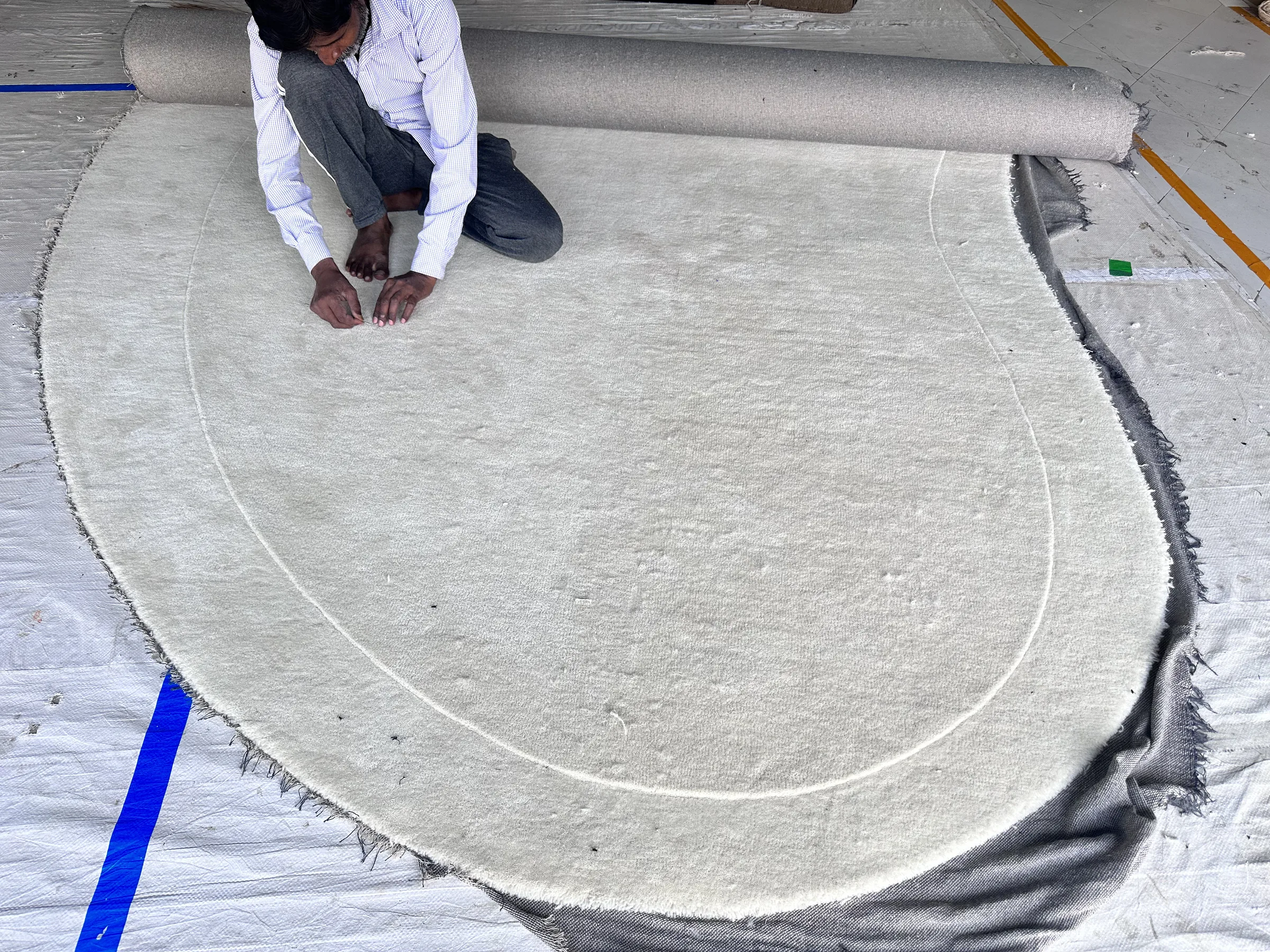
The rug arrives on the finishing floor after weaving, latex-backing (for tufted work), washing, drying and mechanical shearing to level the pile. The design is already visible in the finished pile because the yarn colours read edge-to-edge. Carving begins by identifying the outlines the designer wants to raise — typically the main motifs against the ground field — and running a shear along each line at an angle that removes the outer 2–5 mm of the pile beside the line, creating a small step.
How long does carving a rug take?
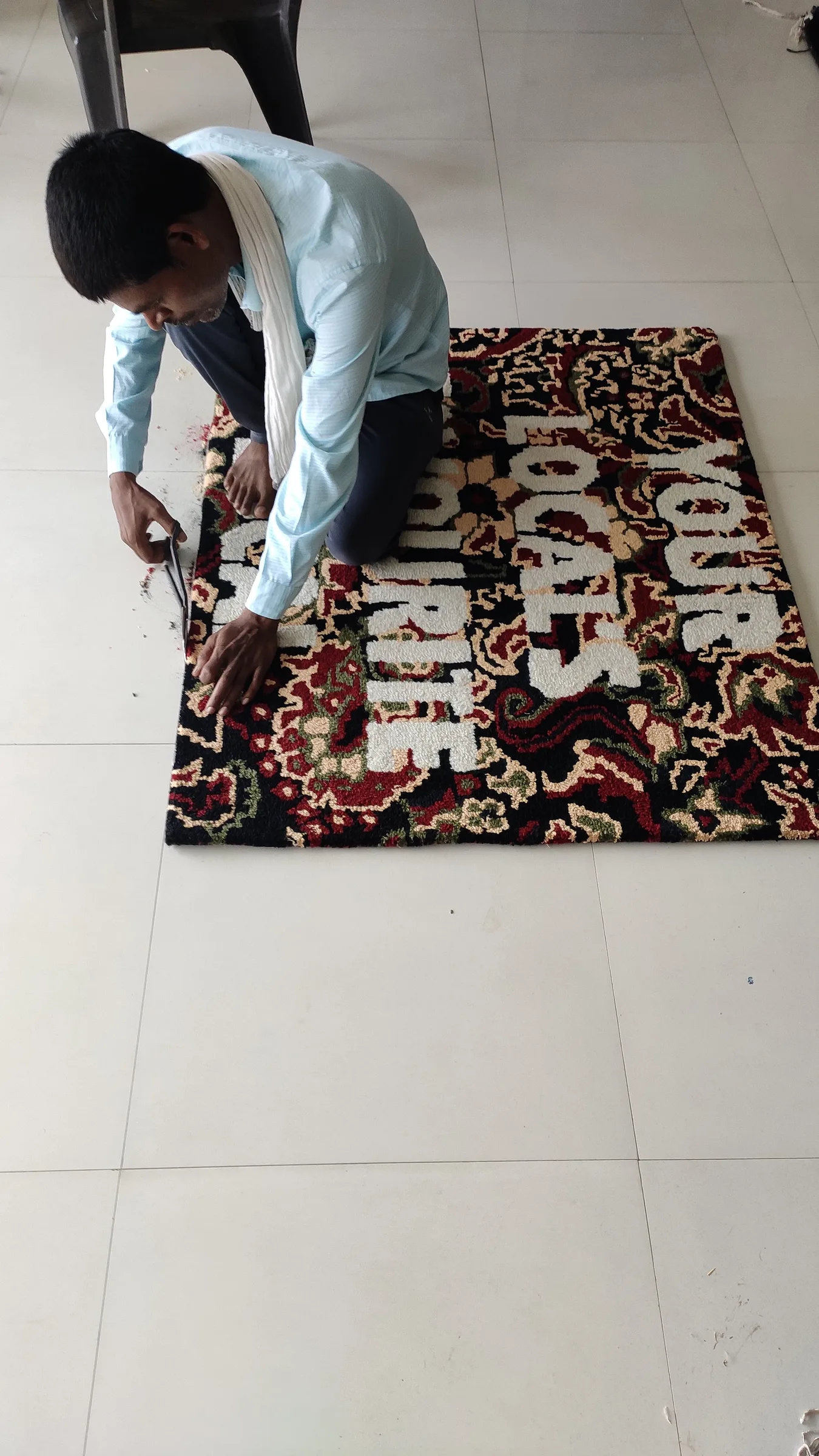
Carving takes a shift for a simple design and up to a week for a heavily-carved traditional programme — it scales with the linear metres of outline to cut, not with the rug's overall size. A large plain-field contemporary rug with a single central motif may take four hours; the same rug covered edge to edge in a floral pattern can take five to seven days. The lead time on quotation includes carving time when the design calls for it.
What is shearing, and how is it different from carving?
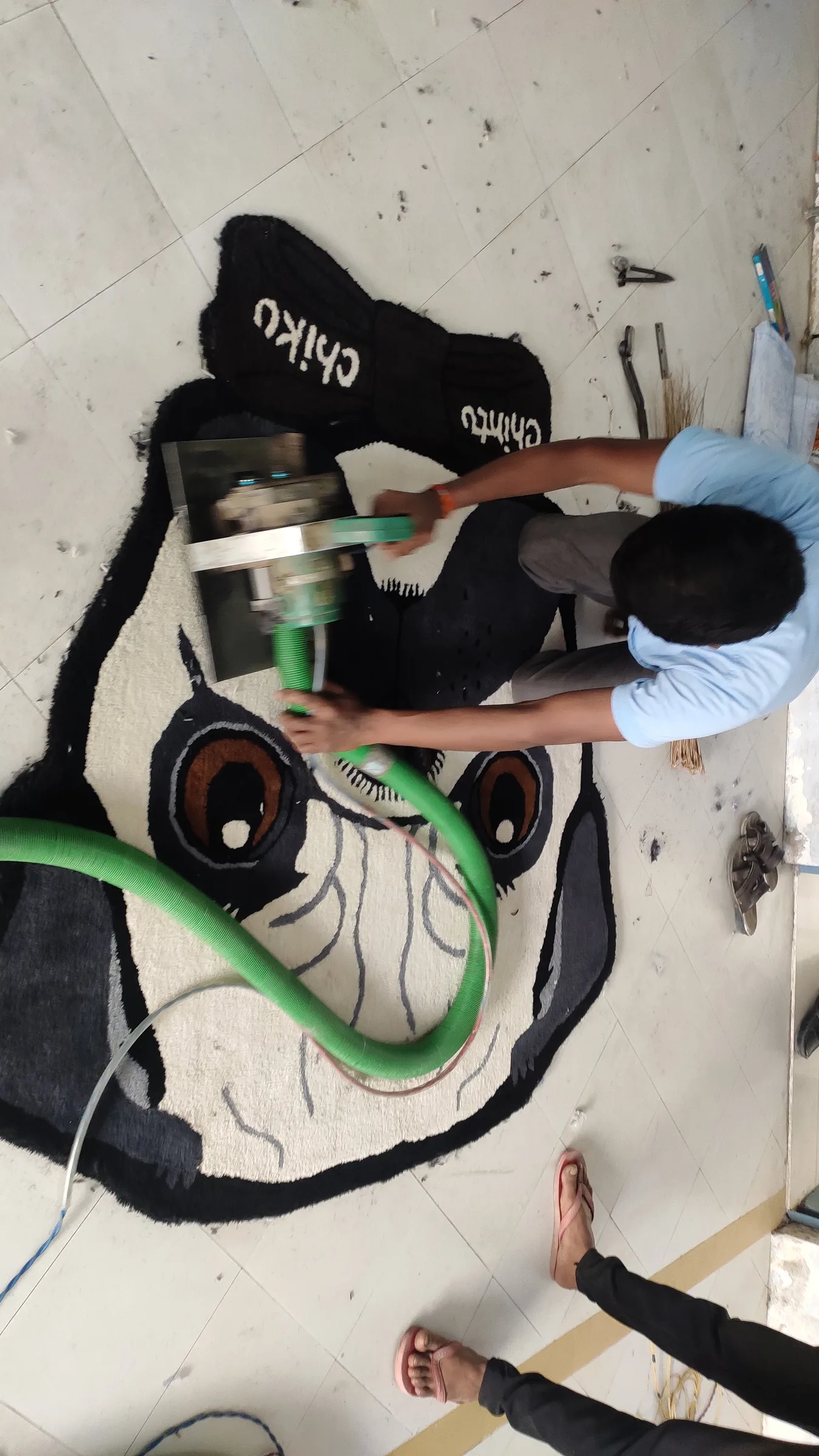
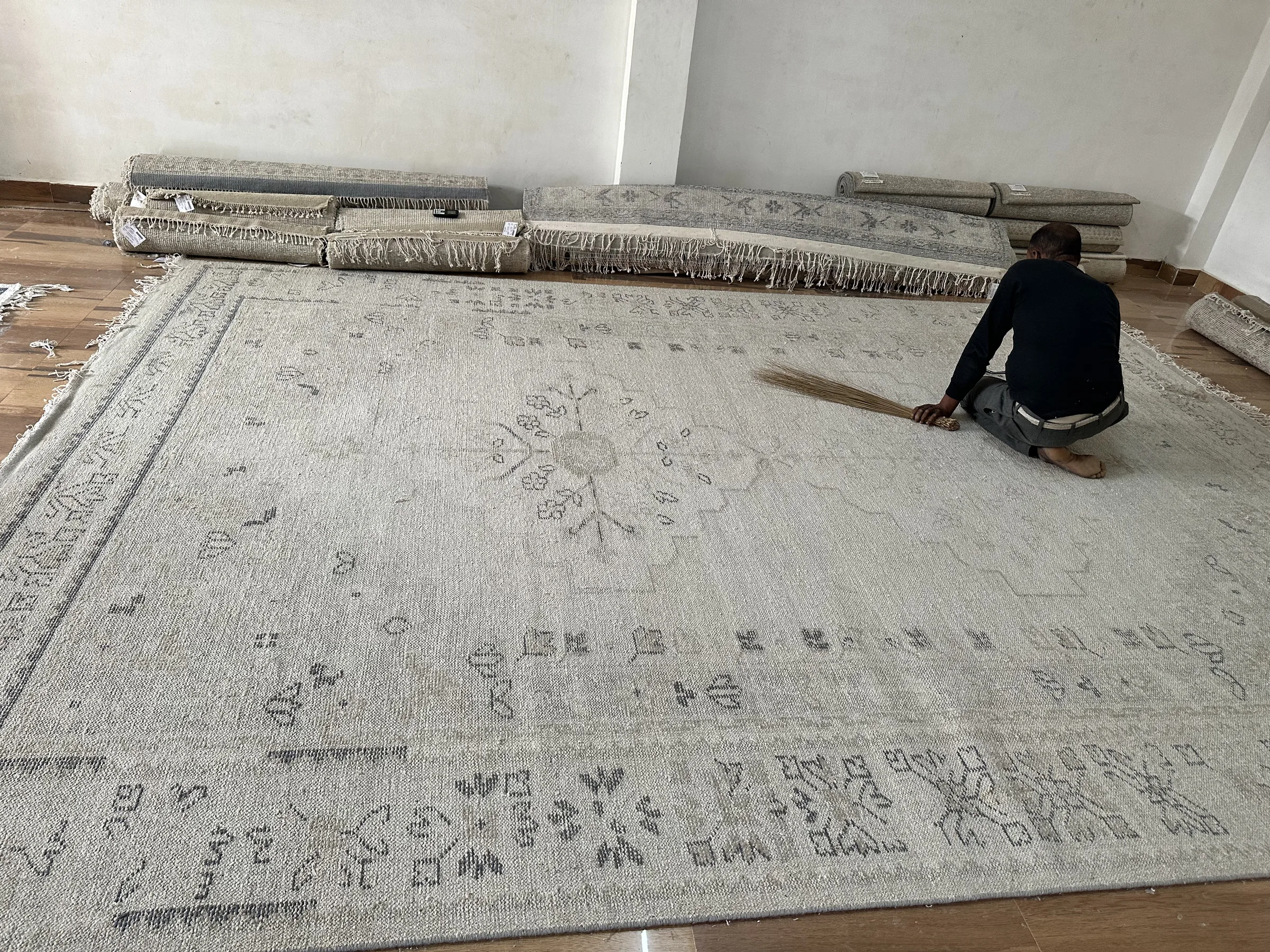
Shearing is the mechanical operation that levels the pile to the specified pile height across the whole rug, using a machine similar to a large lawn mower run over the fabric. Every tufted rug is sheared. Carving is the subsequent hand operation that adds relief around individual motifs; it is optional and is only done where the design specifies it.
Why don't more factories carve well?
Hand-carving is slow, technical, and the wage skill it requires is not the same as knot-tying or tufting — a carver has to see the design as depth, not just as colour. Factories that price aggressively either skip carving on programmes that would benefit, or run a machine bevel that reads flat. PiHue trains carvers in-house on tufted and knotted programmes over years, and the same finishers work every carved programme so that a buyer can trust the depth is consistent from one shipment to the next.
What kind of programmes benefit from carving?
Traditional Chinese, Persian and Aubusson-inspired designs are where carving does the most work — the design is the depth. Contemporary programmes with strong graphic motifs benefit too, because a carved outline separates a bold shape from its ground in a way that colour alone cannot. Plain-field programmes with a single medallion or corner detail may specify carving on just the medallion. On subtle abstract designs where the point is that the pattern quietly emerges, carving is often skipped — adding a hard edge would fight the intent.
What tools do PiHue's carvers use?
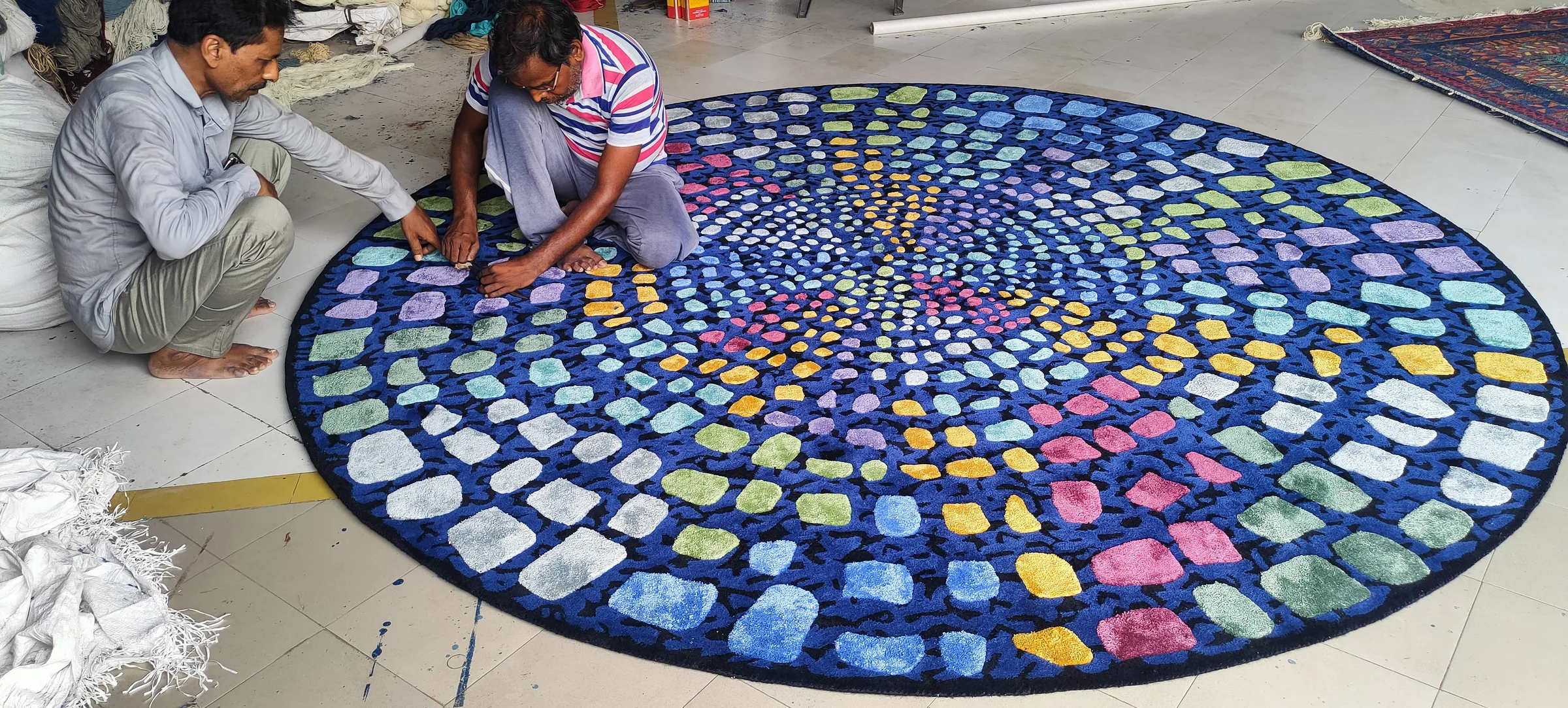
Long-blade hand shears are the primary tool — the same style used in this cluster for generations, sharpened weekly. Curved shears are used for concave lines, straight for the rest. On very short pile the same shear is used at a shallow angle to shave a fraction of a millimetre at a time. No mechanical bevelling tool of any kind is used on a PiHue carved rug — if a rug ships with a carved edge, that edge was cut by hand.
What does the buyer receive with a carved rug?
Every carved rug ships with the same QC slip PiHue ships on every rug — GSM per piece against the specification, size against the specification with the ±3% size tolerance and the 1-inch skew tolerance, and a note that the piece was carved as specified against the approved sample. Carving is inspected on every rug because a shallow carve on one piece and a deeper carve on the next reads as inconsistency across a batch.
See the QC page for the full three-gate protocol and GSM measurement for the ±5% pile-weight tolerance PiHue commits to in writing on the PO.
Can carving be done to a reference sample the buyer supplies?
Yes, and it usually is — the approved strike-off (see custom rug development) is the physical reference the finishing floor works to. The strike-off carries the buyer's approved carve depth and outline width, and every production rug is compared against it before shipping.
Related pages
- Hand-tufted rugs — the construction most often carved
- Hand-knotted rugs — carved as a fine relief on traditional programmes
- Rug washing & finishing — the finishing bay carving happens in
- Quality control — how carving is inspected before shipment
Frequently asked
Is every PiHue rug hand-carved?
No — carving is optional and only done when the design specifies it. Every tufted rug is mechanically sheared to level the pile; hand-carving is a subsequent step that adds relief around individual motifs, and only some designs call for it.
Do you use machine bevelling?
No. Every carved edge on every PiHue rug is cut by hand with long-blade shears. Machine bevelling reads the same on every rug; hand-carving lets the finisher vary the depth to suit the design.
How much does carving add to lead time?
Carving takes a shift for a simple design and up to a week for a heavily-carved traditional programme. It scales with the linear metres of outline to cut, not with the rug's overall size. Lead time on the quotation includes carving time when the design calls for it.
Can hand-knotted rugs be carved?
Yes, often on traditional Chinese and Persian programmes. The pile is usually shorter than on a tufted rug so the carving reads as a fine relief rather than a deeper cut. Handloom and flatweave rugs cannot be carved — their structure has no pile depth to work with.
What tools do carvers use?
Long-blade hand shears — the traditional Bhadohi tool, sharpened weekly. Curved shears for concave outlines, straight for the rest. No mechanical bevelling tool of any kind is used on a PiHue carved rug.
Can the buyer approve the carve depth on a strike-off?
Yes — the approved strike-off is the physical reference the finishing floor works to. The strike-off carries the buyer's approved carve depth and outline width, and every production rug is compared against it before shipment.
Send us your design. Quotation within hours.
A CAD, a sketch or a reference photo is enough — we return pricing, material options and a sampling plan the same working day.