
Rugs are measured, weighed and compared to your approved sample before they leave.
How PiHue verifies quality end to end: incoming, in-process, final — and how the paperwork lines up with what a buyer's QC team expects.
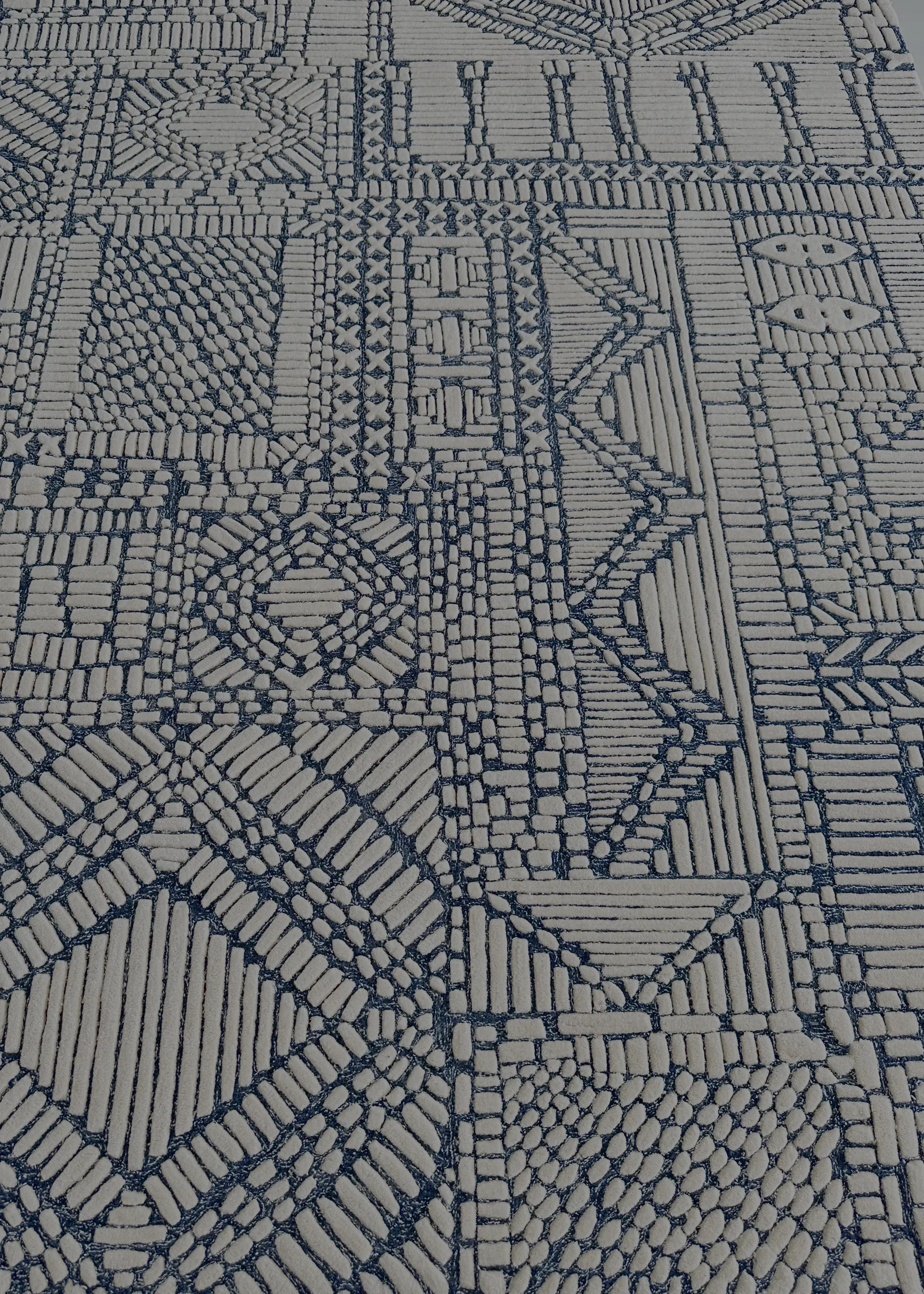
Measured, weighed, compared
Every finished rug is measured against your specification and compared against your approved sample before it is packed. A piece that misses a gate goes back to the loom or the finishing floor — not into a box.
Gate 1 · Incoming
Every yarn lot arriving at the finishing floor is checked against specification before being issued to a loom: colour against the approved lab dip, count against the specified count, RWS/GRS transaction certificates against the batch.
Gate 2 · In-process
On the loom, our supervisors verify knot-map fidelity, colour placement and dimensions against the knot map and the approved sample. Early detection of deviation is far cheaper than late correction.
Gate 3 · Final
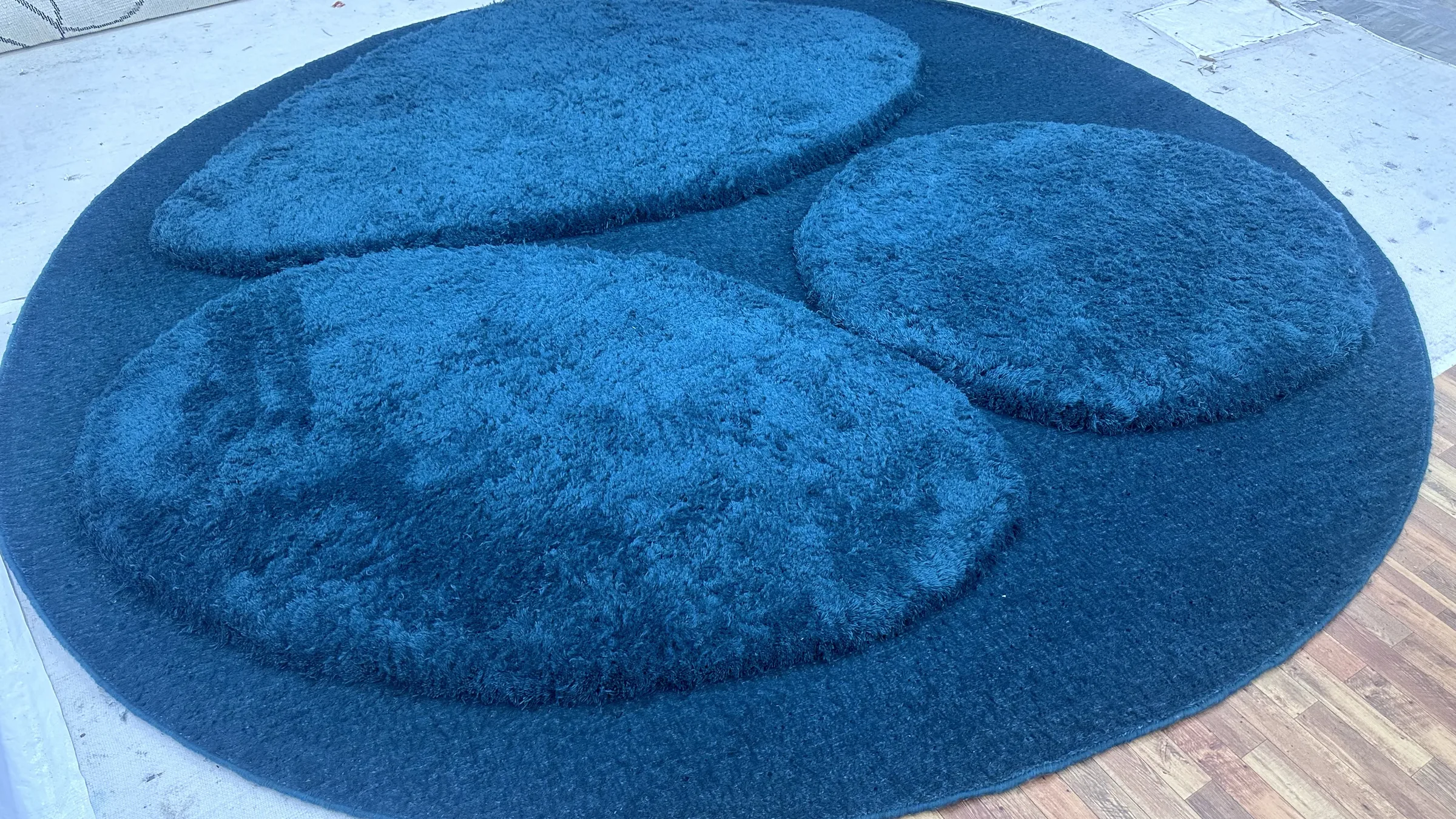
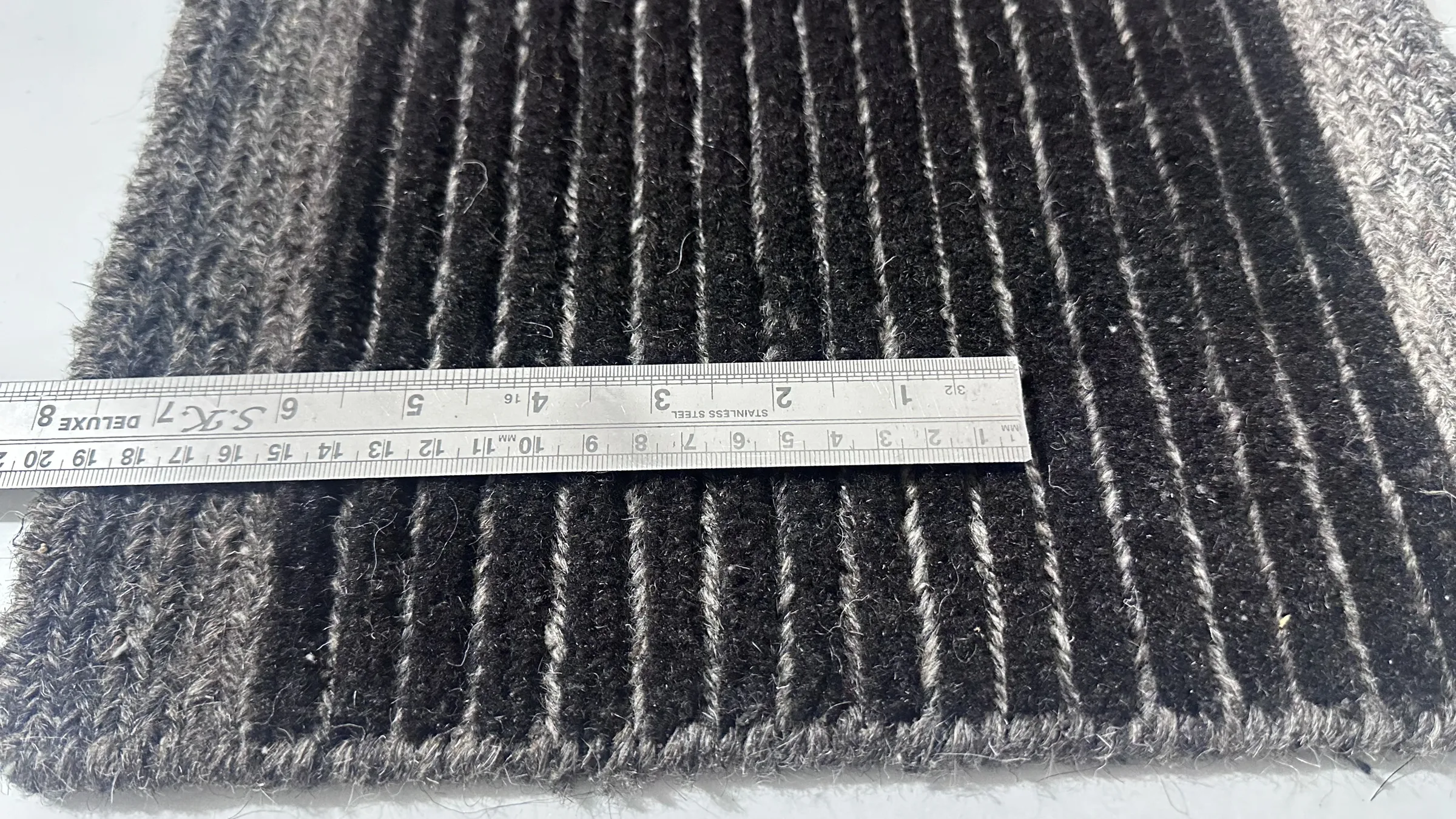
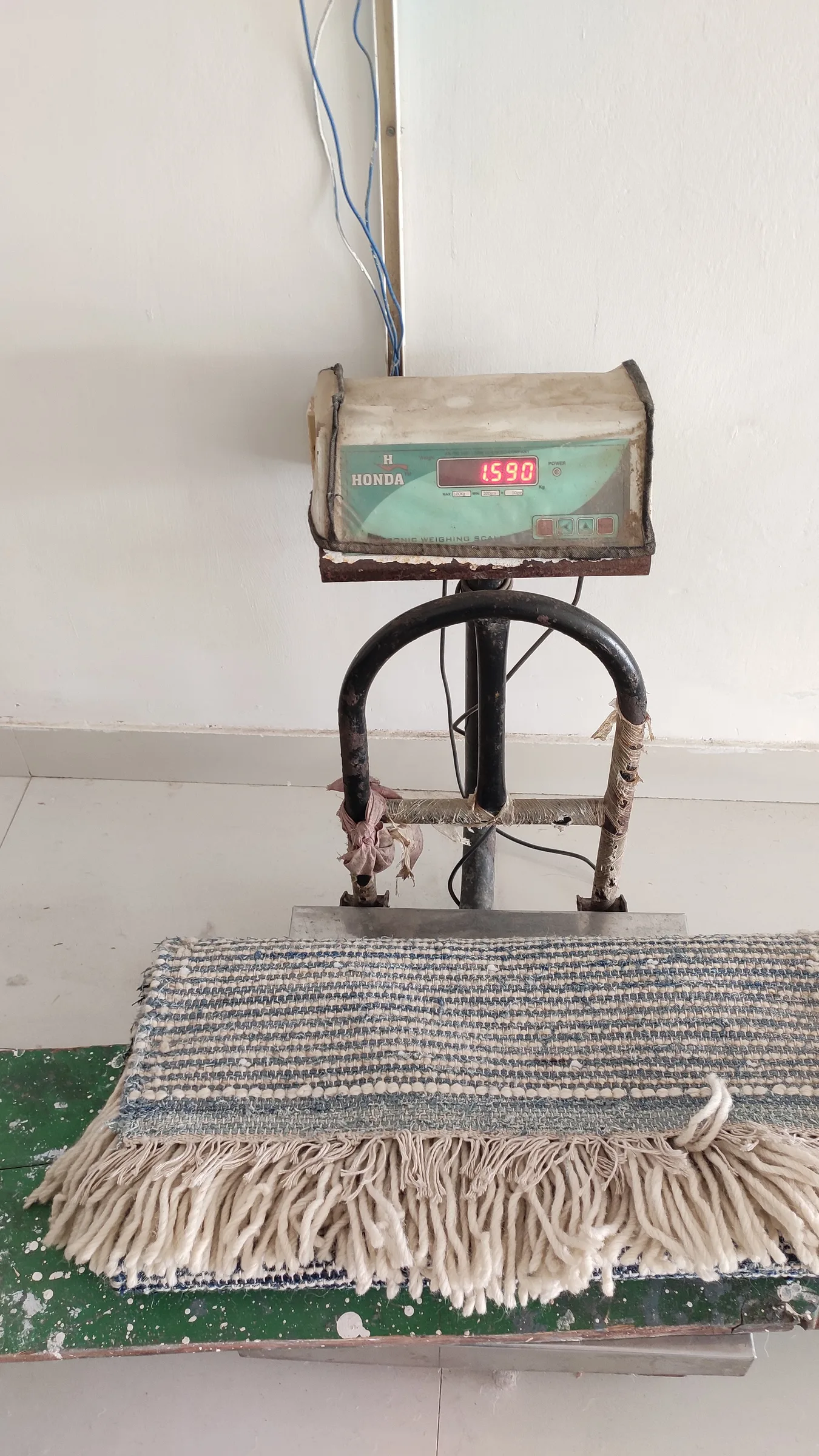
Every finished piece is measured, weighed and compared to your approved sample:
- Size: length × width vs specification, tolerance ±3%.
- GSM: actual pile weight ÷ actual pile area vs specified GSM.
- Finish: shearing evenness, binding integrity, backing / latex cure, fringe integrity.
- Colour: against your approved lab dip and strike-off, under standard light.
A rug that misses a gate goes back — to finishing for rectification, or to the loom if the problem is structural.
What the buyer receives with the shipment
- Packing list per pallet and per rug.
- QC record showing measured size, weight and GSM per piece.
- Transaction certificates for certified programmes (RWS, GRS, Oeko-Tex).
- Approved-sample reference numbers on each label so the piece can be traced back to its origin.
Frequently asked
What does QC look like on the floor?
Three gates, every programme: incoming (yarn lots checked against specification before issue), in-process (knot-map fidelity and dimensions on the loom), and final (size against ±3% tolerance, weight against specified GSM — actual weight divided by actual area — finish against your approved sample). A rug that misses a gate goes back, not into a box.
How is GSM verified?
Every finished piece is weighed and measured on receiving. Actual pile-weight divided by actual pile-area is compared to the GSM specified for the quality. Deviation outside tolerance is rejected back to the loom.
How does Oeko-Tex shape our quality control?
Oeko-Tex is where chemistry meets QC. Certification means the materials in our rugs are laboratory-tested against a catalogue of harmful substances — banned azo dyes, formaldehyde, heavy metals and more — so 'safe for your home' is a test result, not a slogan. In practice it disciplines our inputs: dyestuffs and auxiliaries are selected to the standard before the contracted dye plant receives them.
What if a piece fails final QC?
It goes back to the finishing floor for rectification (re-shearing, re-stretching, re-binding) or to the loom for major issues. It is not shipped. If rectification isn't possible, the piece is remade.
Further reading on pihue.com
Send us your design. Quotation within hours.
A CAD, a sketch or a reference photo is enough — we return pricing, material options and a sampling plan the same working day.