
How we verify GSM on every rug
Whole rug weighed on a calibrated digital platform scale, divided by measured area, per piece before packing. ±5% tolerance committed in writing on the PO. A piece outside tolerance is rejected and a new piece made for the client.
How does PiHue measure GSM on every rug?
The whole finished rug is weighed on a calibrated digital platform scale, and the weight in grams is divided by the measured area in square metres to give GSM — per piece, before packing, with no specimen cut. The same slip records the measured length and width that settles the ±3% size tolerance, and it follows the rug through washing, finishing and packing. Every rug carries an ID assigned at off-loom, traceable in the ERP. Net and gross weight are both checked before shipping.
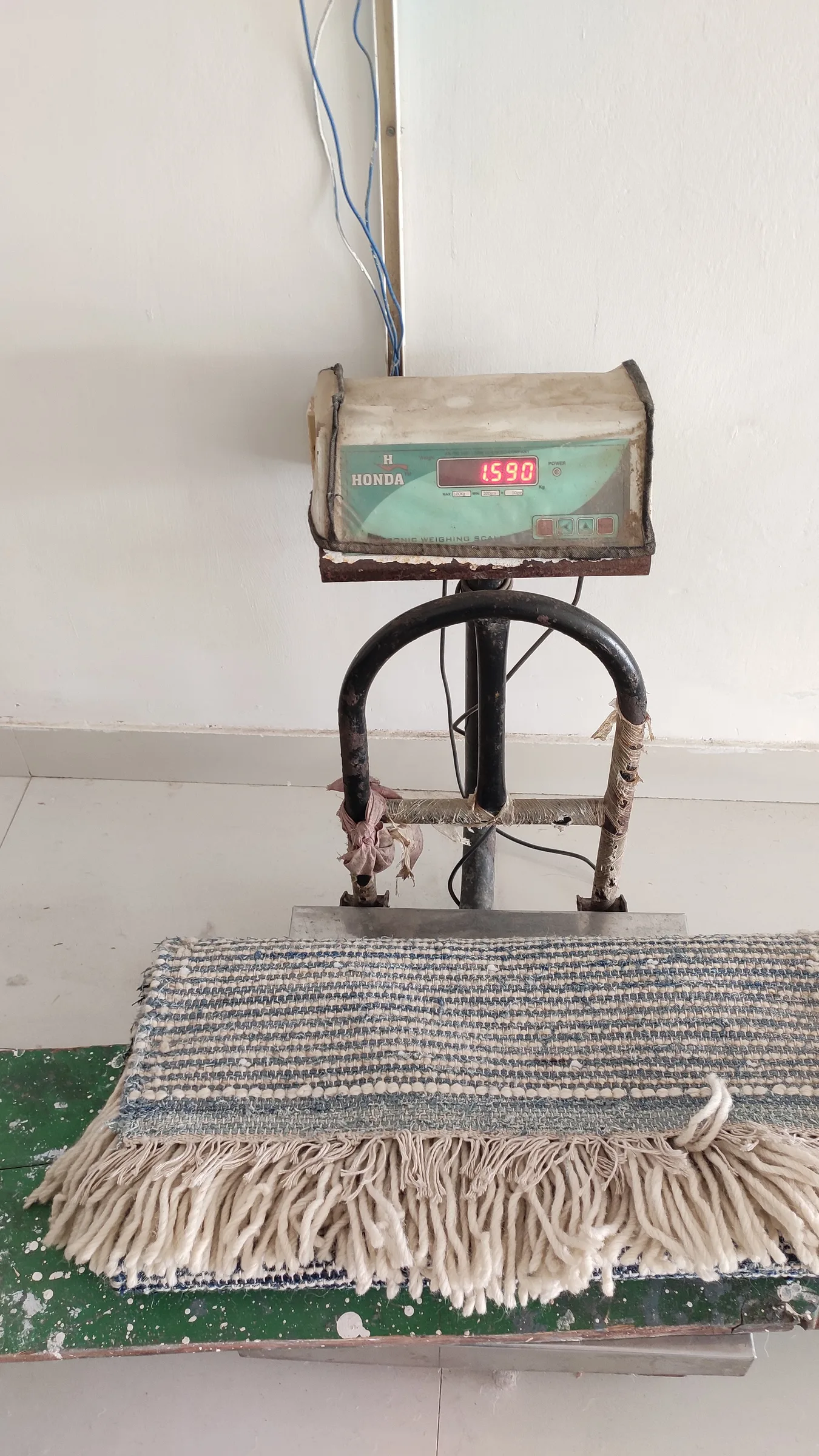
This matches the method published on our journal post on the receiving check. Weight divided by area cannot be negotiated with. Pile height can be fluffed. Photographs can be lit. A knot count can be argued about at the edges. GSM catches quiet substitution — a spinner delivers slightly lighter yarn, a weaver beats the weft a touch less — where every other measurement would let the drift through.
What GSM tolerance does PiHue commit to?
PiHue commits to a GSM tolerance of ±5%, in writing on the purchase order — this is a contractual commitment, not an internal working figure. Very few competitors put a GSM tolerance in writing at all. A specification without a written tolerance is a specification a factory can drift from without breach; a written ±5% means anything outside that band is a QC failure PiHue owns.
What happens when a piece is outside GSM tolerance?
A piece outside the ±5% band is rejected and a new piece is made for the client — not reworked, not discounted, not shipped. Most factories rework or discount out-of-spec production because the piece is already made and rework is cheaper than remake; the buyer accepts the discount and the specification quietly moves. Remaking is the more expensive discipline and the honest one. It is what a contractual tolerance in writing actually means.
Which scale does PiHue use, and how accurate is it?
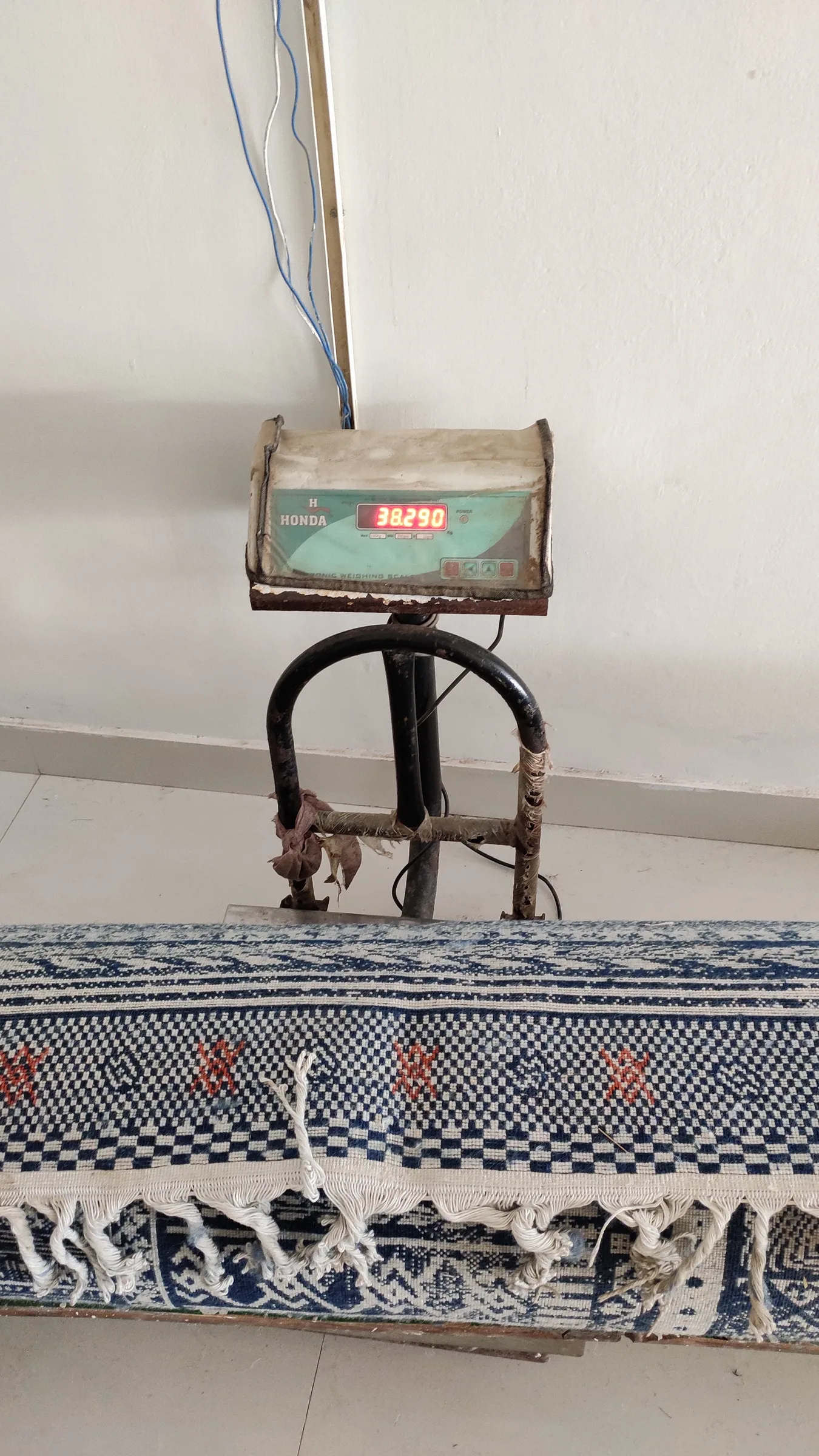
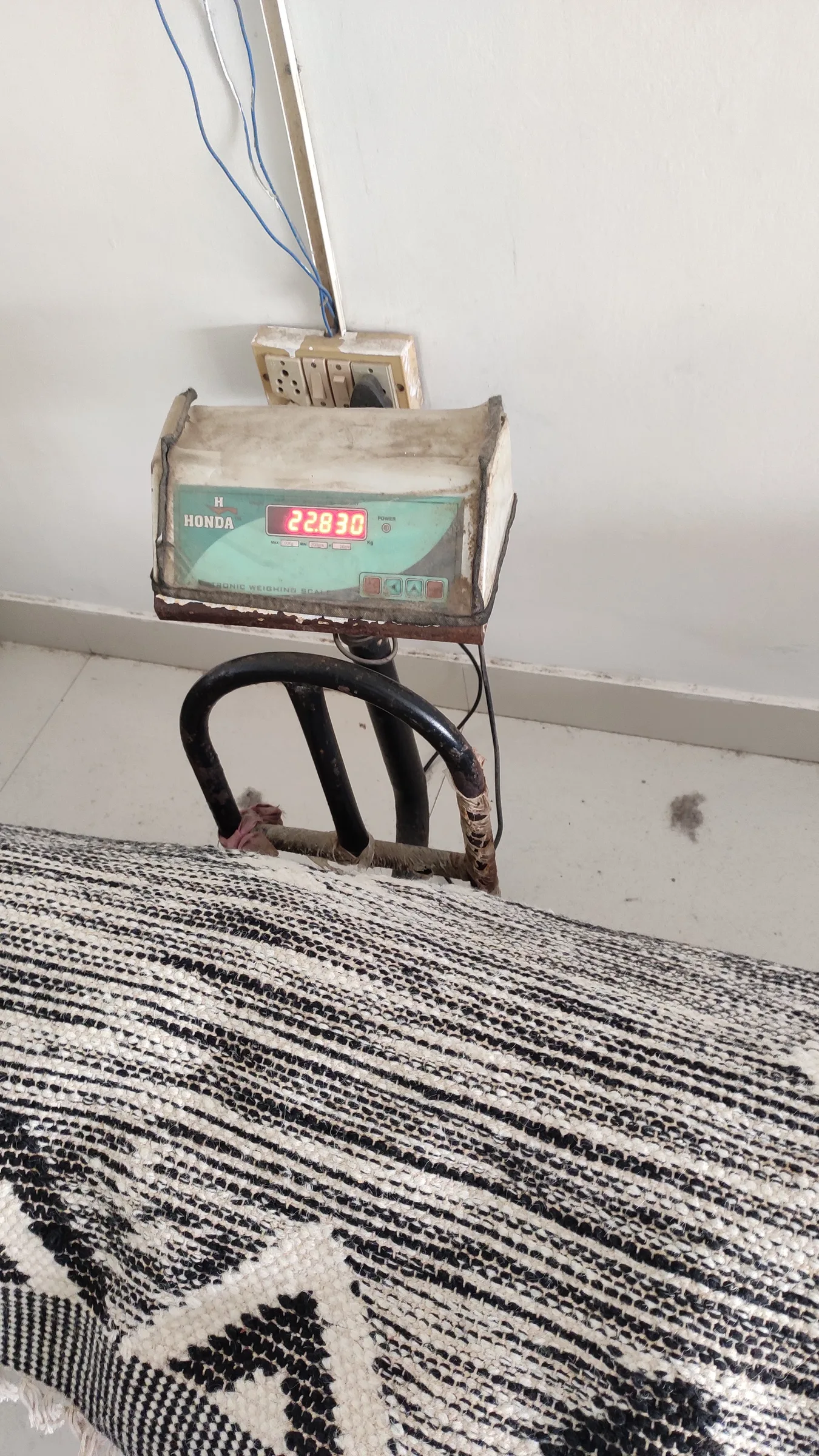
Whole rugs are weighed on a digital platform scale with 10 g accuracy — a separate analytical balance on the QC bench is used for yarn and fibre samples where finer readings are needed. The two instruments are distinct and should not be conflated. At a 6 × 9 ft rug (approximately 5 m²), 10 g accuracy translates to 2 g per square metre — well inside the ±5% band on any realistic pile weight.
Why weigh every piece and not sample?
Sampling catches some drift; weighing every piece catches all of it. A specification is a promise made at strike-off approval — the buyer priced retail, shipping and margins on that number. If production drifts, the rug still looks right. It just isn't the product that was sold. Per-piece verification is what makes the ±5% tolerance real; a factory that samples cannot honestly commit to it.
Which tests happen on the same slip as GSM at receiving?
The receiving slip records GSM, measured length and width, skew, net weight, and gross weight for every rug — all in one pass at the same bench. The slip stays with the rug through washing, finishing and packing, and its numbers are logged in the ERP against the rug's off-loom ID. Every piece in a shipment is traceable to its numbers.
The full QC bench holds a wrap reel, an analytical balance, a twist tester, a hot-air oven, a digital weighing scale, a measuring tape, and standard laboratory equipment. A separate page details how each is calibrated and which third-party labs handle the tests we do not perform in-house.
How is the scale calibrated?
The weighing scale is calibrated every three months through IICT Bhadohi — the Indian Institute of Carpet Technology, the national carpet technology institute located in the same town as our factory. IICT supplies result papers from each calibration. Read more on the calibration and lab partners page.
What documentation does the buyer receive?
Every shipment carries the QC slips for every rug in the shipment — GSM per piece against the specified GSM, measured length and width per piece, skew, and net and gross weight. The slip references the same shade code and knot-map file the buyer approved at the strike-off stage. Test reports from the third-party chemical panel are available to buyers on request; specific results are covered on the chemical testing page.
Frequently asked
What GSM tolerance does PiHue commit to?
±5%, in writing on the purchase order. Contractual — not an internal working figure. A piece outside the ±5% band is rejected and a new piece made for the client, not reworked and not discounted.
Do you weigh every rug, or a sample?
Every rug. The whole finished rug is weighed on a calibrated digital platform scale before packing, and the weight is divided by the measured area to give GSM. Sampling would catch some drift; per-piece verification catches all of it and is what makes the written ±5% tolerance real.
Do you cut a specimen for the GSM check?
No. The whole finished rug is weighed on the platform scale, so no specimen cut is taken. This preserves the rug's structural integrity and produces a GSM figure representative of the entire piece rather than a corner sample.
How accurate is the scale?
The digital platform scale used for whole rugs has 10 g accuracy. At a 6 × 9 ft rug (approximately 5 m²) that translates to 2 g per square metre — well inside the ±5% band for any realistic pile weight. A separate analytical balance on the QC bench is used for yarn and fibre samples.
Who calibrates the scale, and how often?
IICT Bhadohi — the Indian Institute of Carpet Technology — calibrates the weighing scale every three months. IICT is the national carpet technology institute for India and is located in the same town as PiHue's factory. IICT supplies result papers with each calibration.
What happens if a rug fails the GSM check?
It is rejected and a new piece is made for the client. Not reworked. Not discounted. Not shipped. Most factories rework or discount out-of-spec production; PiHue treats the written ±5% tolerance as the shipment gate.
Send us your design. Quotation within hours.
A CAD, a sketch or a reference photo is enough — we return pricing, material options and a sampling plan the same working day.