
Reading a knot map: how weavers turn your design into a rug
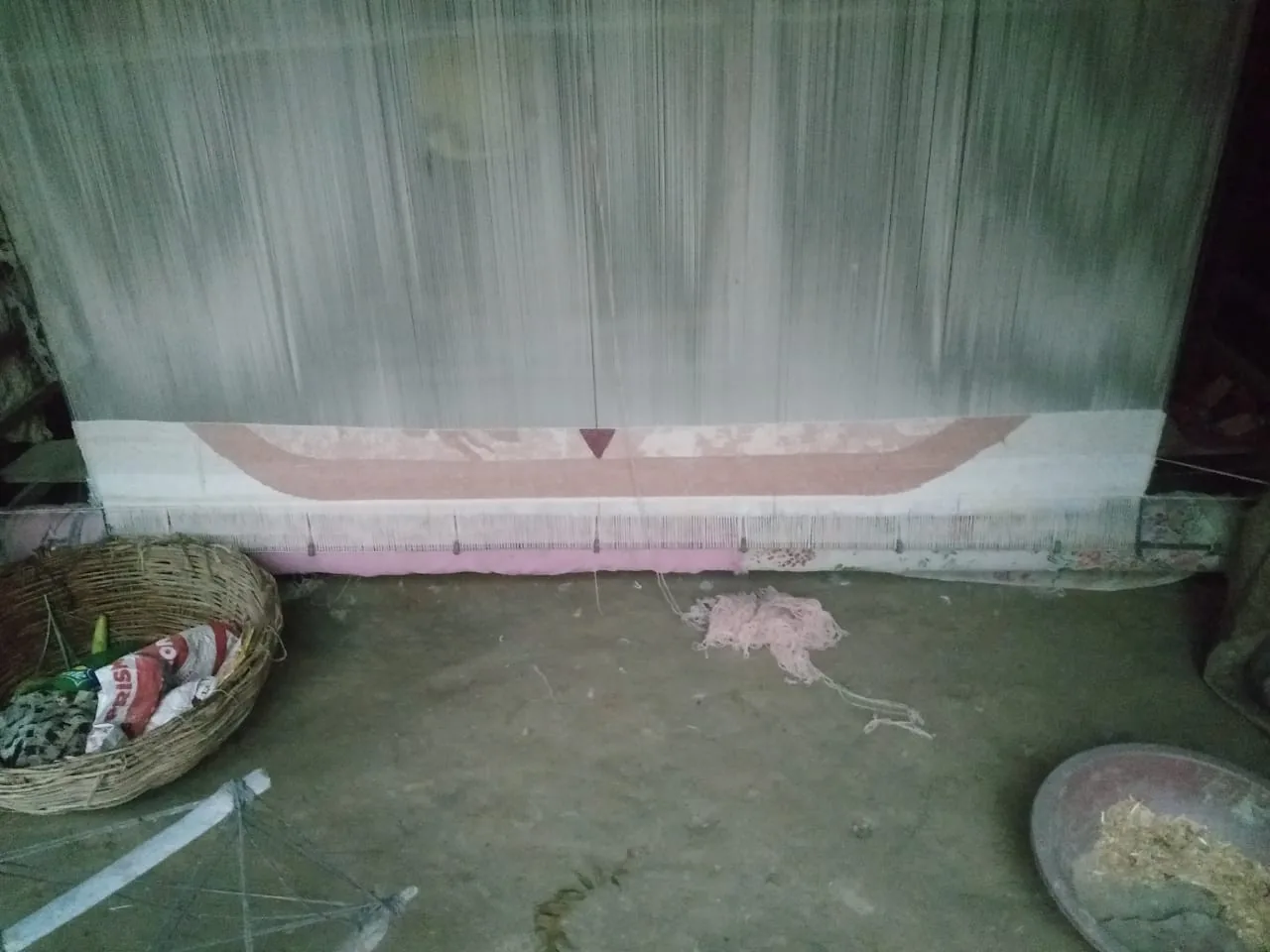
Every hand-knotted rug on our floor in Bhadohi begins the same way: as a sheet of graph paper pinned above a loom, one square per knot, one colour per shade. That sheet is called a knot map — the sheet music of hand-knotted weaving. This post walks through what a knot map is, how we build one from a buyer's design, and what a weaver actually does with it as the rug grows row by row.
What a knot map is
A knot map — or knot chart, or in Persian traditions naqsheh — is a scaled grid where each cell represents a single knot. If a rug is planned at 100 knots per square inch (KPSI), one square inch of the finished rug is 10 rows by 10 knots, so the map for a 6 × 9 ft rug at that density is a grid of tens of thousands of coloured cells. Cells are numbered or coded so the weaver never has to guess where they are; each row of the grid becomes one horizontal pass across the loom.
How a design becomes a knot map
The design usually arrives as a CAD file, a scanned sketch, a photograph of a fabric, or an existing rug the buyer wants adapted. Our design team does four things with it:
- Redraws the artwork at the final rug size, respecting the aspect ratio the loom will produce.
- Reduces the palette to the exact dyed-yarn shades that will weave the piece — no gradients, no in-between colours; every pixel becomes one of the shades on the shade card.
- Rasterises the redrawn artwork to a grid at the specified KPSI, so one design pixel equals one knot.
- Numbers the colour blocks and prints the whole map to scale, ready for the loom.
The last step is the least glamorous and the most important. A design that reads well on screen can be unweavable at the intended density — a hairline serif on a logo, for instance, needs several knots to appear; if the density is too low, the letter either loses shape or forces the whole rug into a finer, more expensive quality. Reducing the artwork to the grid is the moment the design meets the loom, and it is why we always ask what density has been priced before we start the map.
What a weaver actually reads
A weaver at the loom does not read a knot map cover to cover. They read one row at a time. As they tie the pile knot around the cotton warp, they follow the current row from one end to the other, counting the coloured squares to know when to switch yarn: eight knots of ivory, four of madder, two of indigo, back to ivory. When a row is finished, the weft is beaten down, the pile is cut flush, and the map advances one line. On a 6 × 9 ft rug at 100 KPSI, that is roughly six hundred rows of about ninety knots each — every row read cleanly, or the pattern skews.
Experienced weavers memorise sections of a pattern and only refer back to check the shade order. On complex programmes, senior weavers set up the first few inches and then hand the loom to the team who will finish the piece; the setup rows fix the count so nothing drifts.
Why we redraw your artwork
Buyers often ask why we do not simply weave from the CAD as sent. The answer is that a CAD and a knot map are different objects: a CAD describes shapes; a knot map describes knots. Redrawing lets us keep straight lines actually straight at the chosen density (diagonals become stepped, but predictably so), match every colour to a real dyed shade rather than an approximation, flag detail that will be lost before the loom is dressed — so decisions happen at the file, not at the sample — and keep a single archived master so re-orders and colourways match the first weaving. We share the redrawn map back with the buyer for approval before dyeing begins. Nothing gets tied until that approval is in.
What this means for the file you send
The most usable files are vector (AI, EPS, PDF), a high-resolution TIF at 300 dpi, or a hand drawing scanned at similar resolution. Send the intended finished size and, if you have priced a specific KPSI, tell us that too. If you have a Pantone or ARS 1400 reference for colours, share it — we run lab dips against those references before the map is finalised. And if all you have is a photograph of a rug you have seen, send that too: a good part of our design work is faithful reinterpretation of references the buyer cannot use directly.
The knot map is where a design becomes committable — the point at which cost, density, size and colour stop being adjustable variables and become the specification the loom will follow.
You can read more about how knot count sets the ceiling on rug detail on our page for hand-knotted rugs, see how the map fits into the wider custom rug development flow from enquiry to strike-off, and follow the file-to-loom hand-off on our private label manufacturing page.