
Ten days to the right colour: our lab dip process
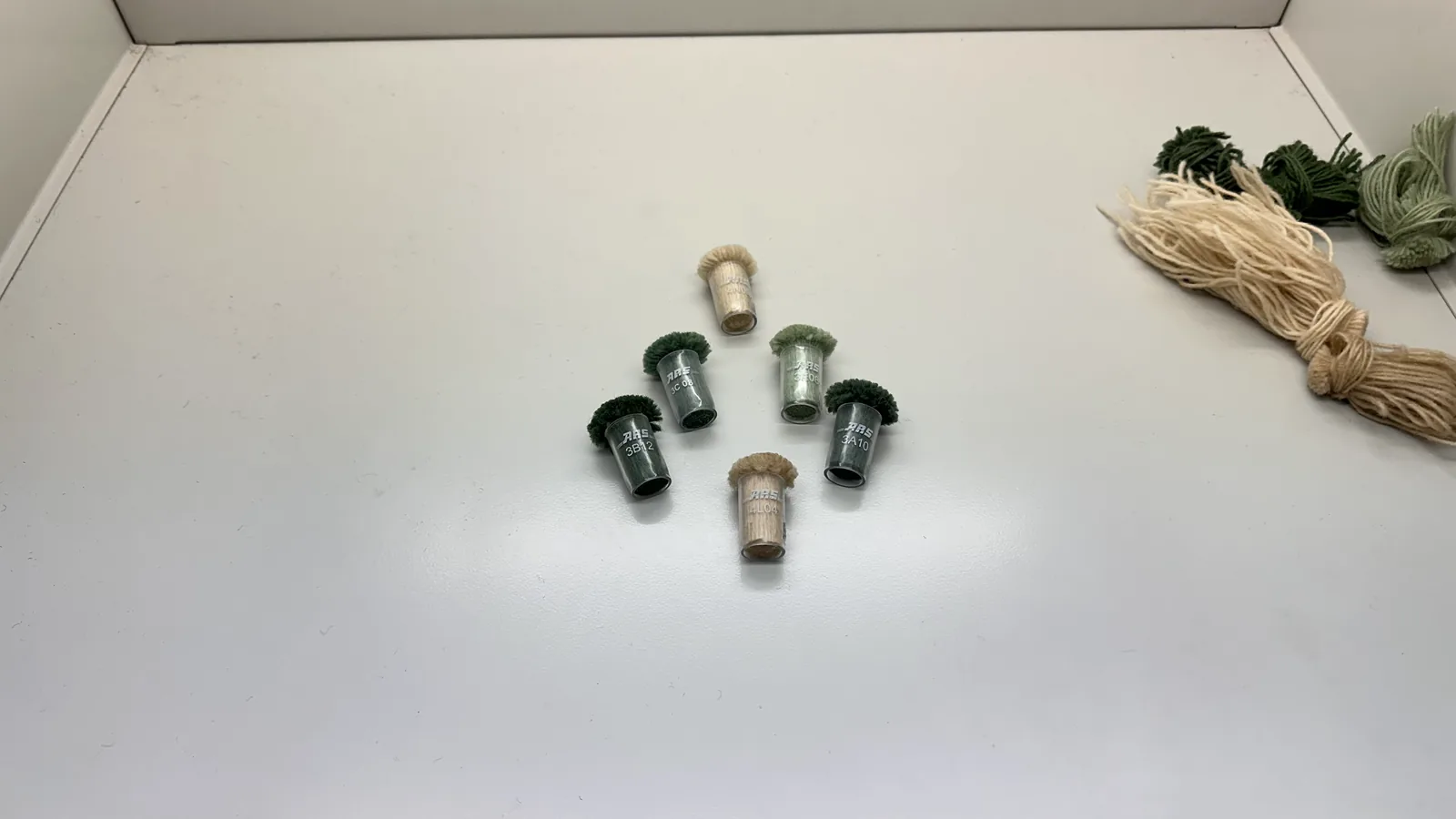
Colour is where most rug programmes quietly fail. A design approved on a laptop under warm office light will look different in a Delhi showroom under LEDs and different again on a wool pile in daylight. Ten days out of a rug's ninety-day life belong to a small, unglamorous process that closes that gap before a single knot is tied. We call it the lab dip.
What a lab dip is
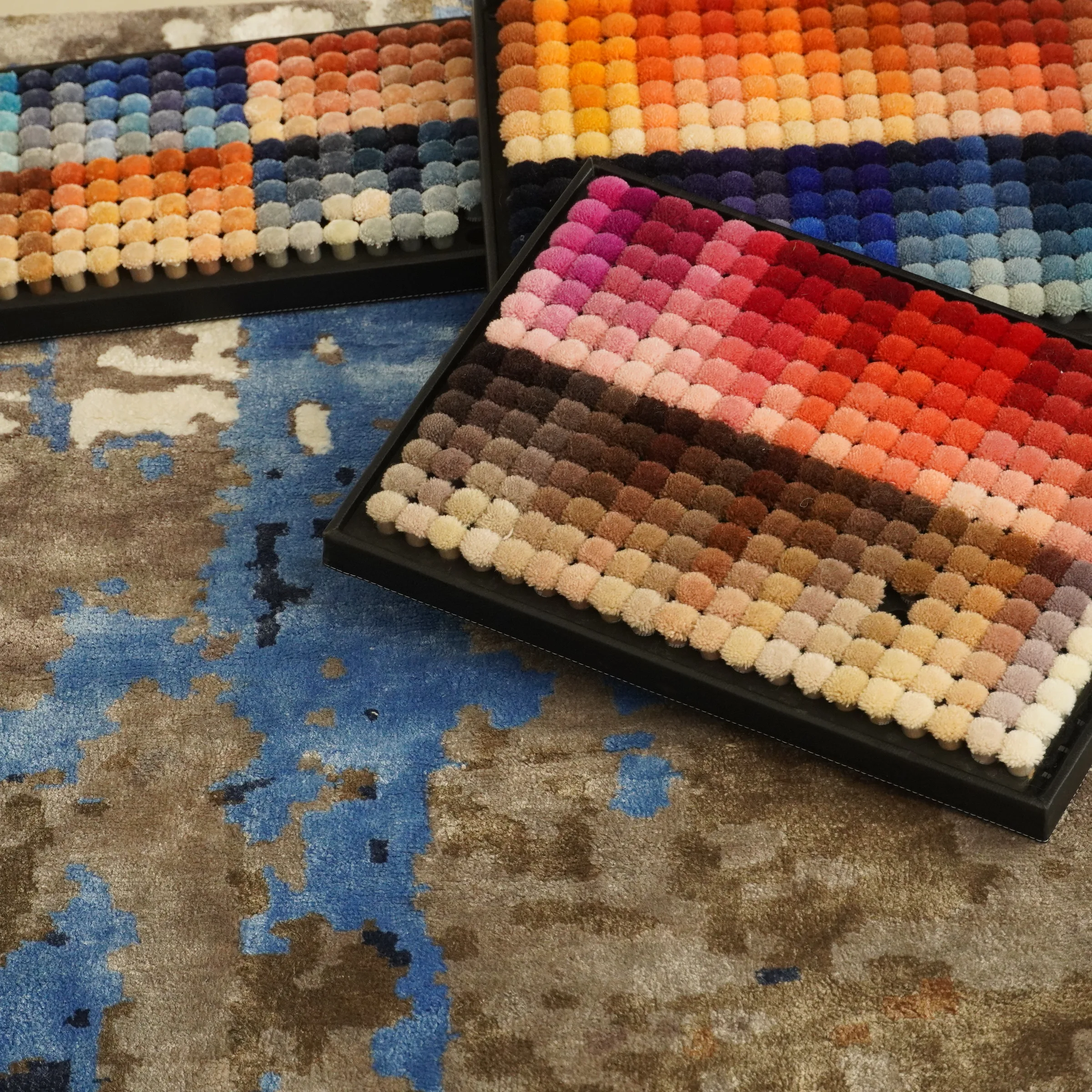
A lab dip is a small hank of yarn dyed to a target colour reference — usually a Pantone chip, an ARS 1400 shade card, a physical swatch, or a specific pixel value on the buyer's CAD. The hank is dried, labelled and compared against the reference under controlled light. When the match is right, the exact recipe — dyestuff, quantities, water ratio, temperature, timing — is locked and archived under a shade code. That code is what the dye plant pulls when production begins.
The point of dipping first is that yarn does not behave like screen colour. Wool absorbs dye unevenly at first, silk shifts in the wash, viscose reads glossier than its neighbours. Small hanks let us find out what a shade actually looks like on the fibre it will be woven from — and let us adjust before we commit a full production quantity to dye.
The ten days, in order
- Reference received. Pantone code, ARS number, or a physical swatch. If only a JPEG is available, we ask for a print or a fabric sample; screen colour is not a reliable reference by itself.
- Recipe draft. At the contracted dye plant a starting recipe is proposed based on the reference and the fibre.
- First dip. A small hank is dyed, rinsed, dried and mounted on a submission card next to the reference.
- Light-box check. The submission is compared against the reference under D65 (daylight), TL84 (fluorescent) and A (incandescent). A match under one light and a mismatch under another means metamerism, which we describe below — and which the recipe has to solve, not paper over.
- Adjustment. If needed, the recipe is refined (more or less of a component dye, a shift in mordant, a change in dwell time) and re-dipped.
- Buyer approval. Once we are confident, the submission goes to the buyer — typically two to three cards, sometimes with adjacent options if the reference is ambiguous.
- Recipe locked. The approved recipe is filed under a shade code and archived; production dyeing pulls from it. The same code is used for any re-orders in the future.
Total elapsed time: about ten days on standard programmes. Complex programmes with unusual references or non-standard fibres can run longer; a single-shade re-match from an archived recipe can be much shorter.
Metamerism, without the jargon
Metamerism is the plain fact that two colours can match under one light and not under another. A cushion in a shop looks red-brown under halogens and reads noticeably cooler under daylight from the window. Rug buyers see this most clearly when a colour approved on a laptop screen ships and lands in a showroom lit by a different colour temperature.
Our light-box check is designed to catch metameric matches before they leave the dye plant. If a shade only works under one light, the recipe has to be reformulated so it holds across at least the three references we use. A rug that only looks right in one lighting condition is a rug that will disappoint the buyer's own customers.
Why we do not skip it
There are cheaper paths. A busy shop can dye directly to a Pantone chip and hope. It works often enough to be tempting. What it does not do is protect the buyer when a batch drifts, when a re-order comes in six months later, or when the shade shows up under a different light in a photograph or a showroom. The lab dip is our archive of every colour we have ever committed to. It is also the document a buyer can hold us to if a production batch does not match — because there is a physical, approved reference on file.
What a buyer should send
The most reliable references, in order of preference: a physical swatch of the material we will match against; an ARS 1400 or Pantone TCX code; a Pantone TPG or TPX chip photograph with the code; a CAD file with the specific pixel value flagged. Screen colour without a chip reference is a starting point, not a target.
If a buyer has a corporate palette locked to specific Pantone codes, we can archive those under a client shade set so future programmes reuse the same approved recipes rather than starting fresh each time.
Where the lab dip sits in the wider process
Colour approval happens before dyeing production yarn; dyeing production yarn happens before strike-off; strike-off happens before full weaving. Ten days at the top of that chain saves weeks further down. A colour caught at the lab dip stage costs us a hank of yarn. The same colour caught after a two-piece strike-off costs the samples, the loom time, and the pause while replacements are made.
You can read more about how colour approval fits into a full order in from enquiry slip to shipment, and where it meets weaving in reading a knot map. If you are working out a private-label colour palette from scratch, the custom rug development page walks through the shape of the process.