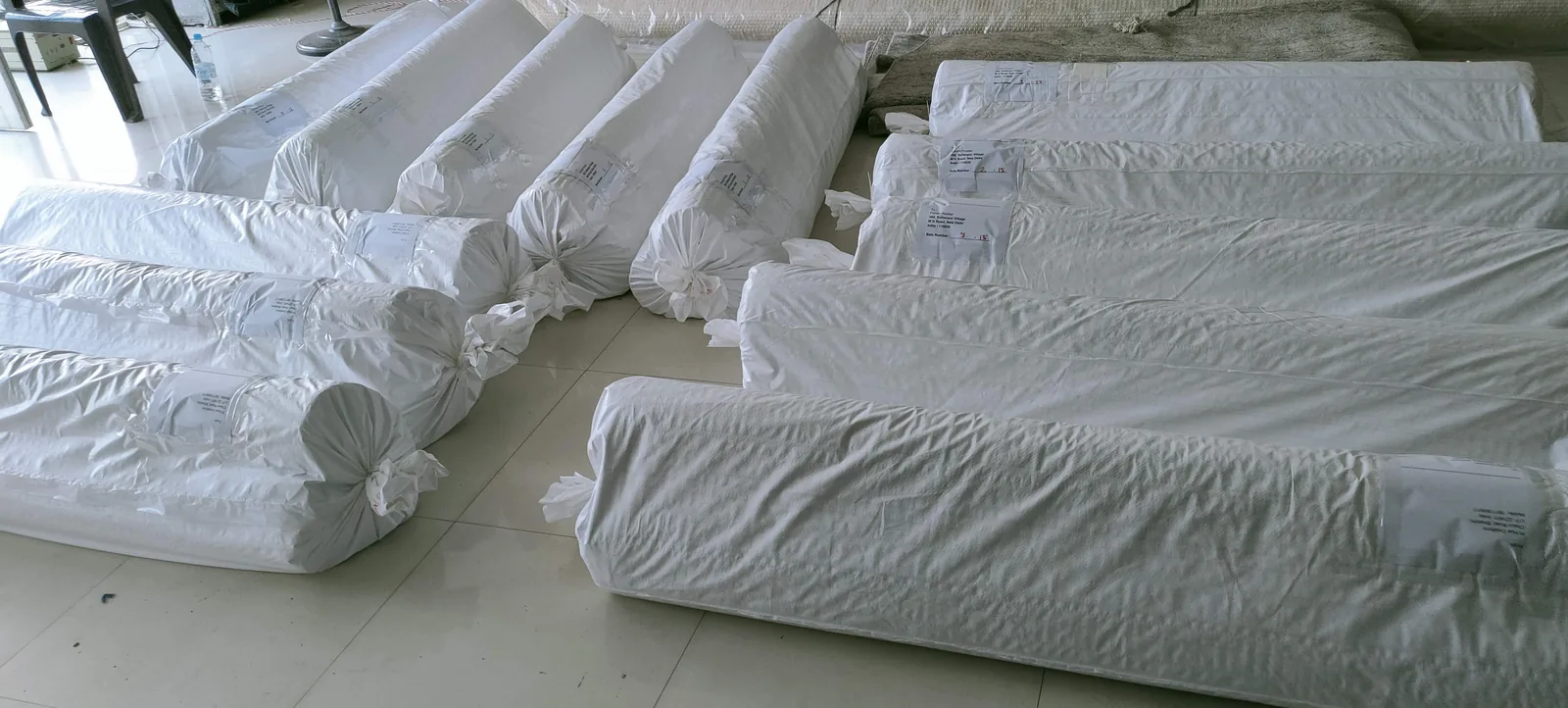
A drawing becomes a map
Idea, CAD, then a knot map. Your artwork is redrawn at full size — every square one knot, every colour a numbered yarn. The map also fixes the yarn requirement per square metre, which is what the dye order is built from.
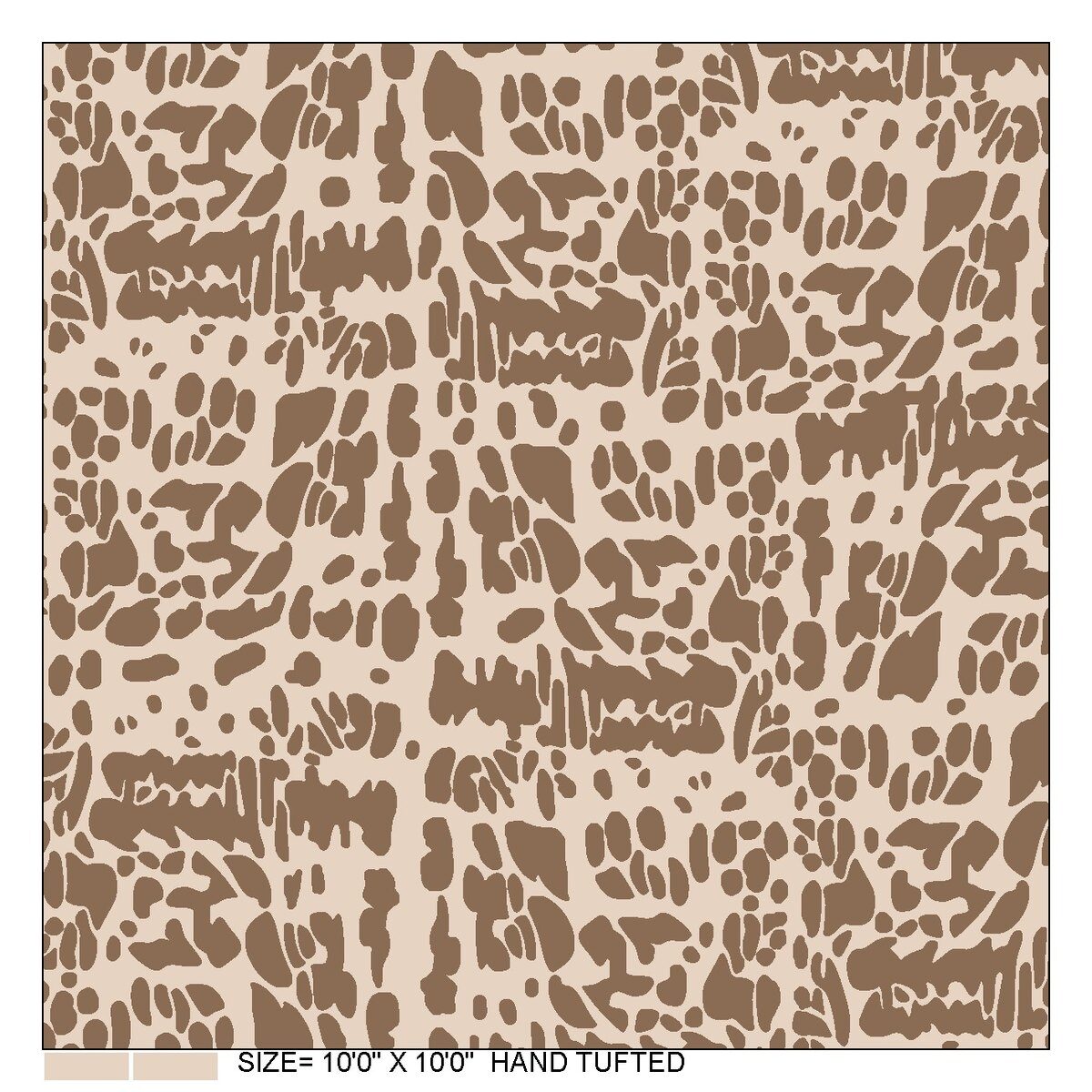

Where the wool comes from
Raw wool arrives and is tested before anything else happens to it — count on the wrap reel, twist on the twist tester, moisture regain in the hot-air oven, weight on a balance calibrated by IICT Bhadohi. RWS-certified wool carries transaction certificates from the farm forward.
Handspun yarn is produced within our own operation. Mill-spun is sourced to specification. Custom blends from a 5 kg spin lot.
Secondary figure is an illustration of RWS-certified wool origin — not our farm, not our sheep. Included to show what the standard covers: animal-welfare-audited farms, land-management standards, transaction certificates that travel with the wool.

Wool carding, in motion
The carding machine on the floor — the wool being drawn out and aligned before it is spun into yarn. 22 seconds.
Yarn takes the colour
Yarn is dyed to the design, not picked from stock. Lab dips are matched to Pantone TCX and ARS 1400 references and returned for approval in about ten days. Dyeing is carried out at a contracted OEKO-TEX and RWS certified plant, and colour fastness is tested.
Minimum dye lot is one kilogram — so a custom colourway is available on a single rug, not only on a bulk programme.


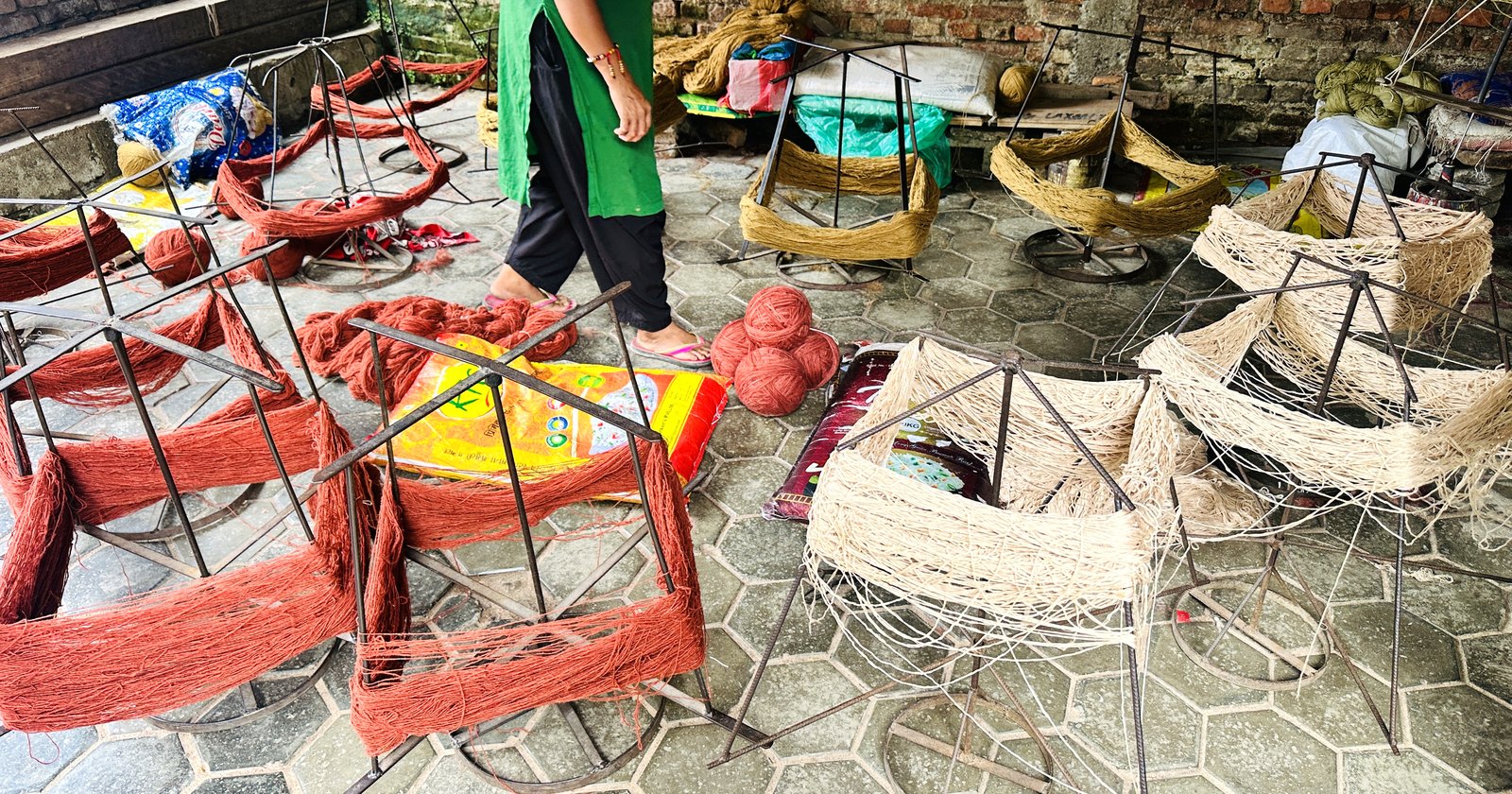
Balled and ready to issue
Dyed yarn wound into balls for the loom.


Knot by knot, row by row
Yarn is issued against the work order at the per-square-metre figure the design calls for. Consumption is reconciled on return and any shortage carries forward against the next issue.
Looms run to 20 feet in width, so large formats are woven in a single piece.
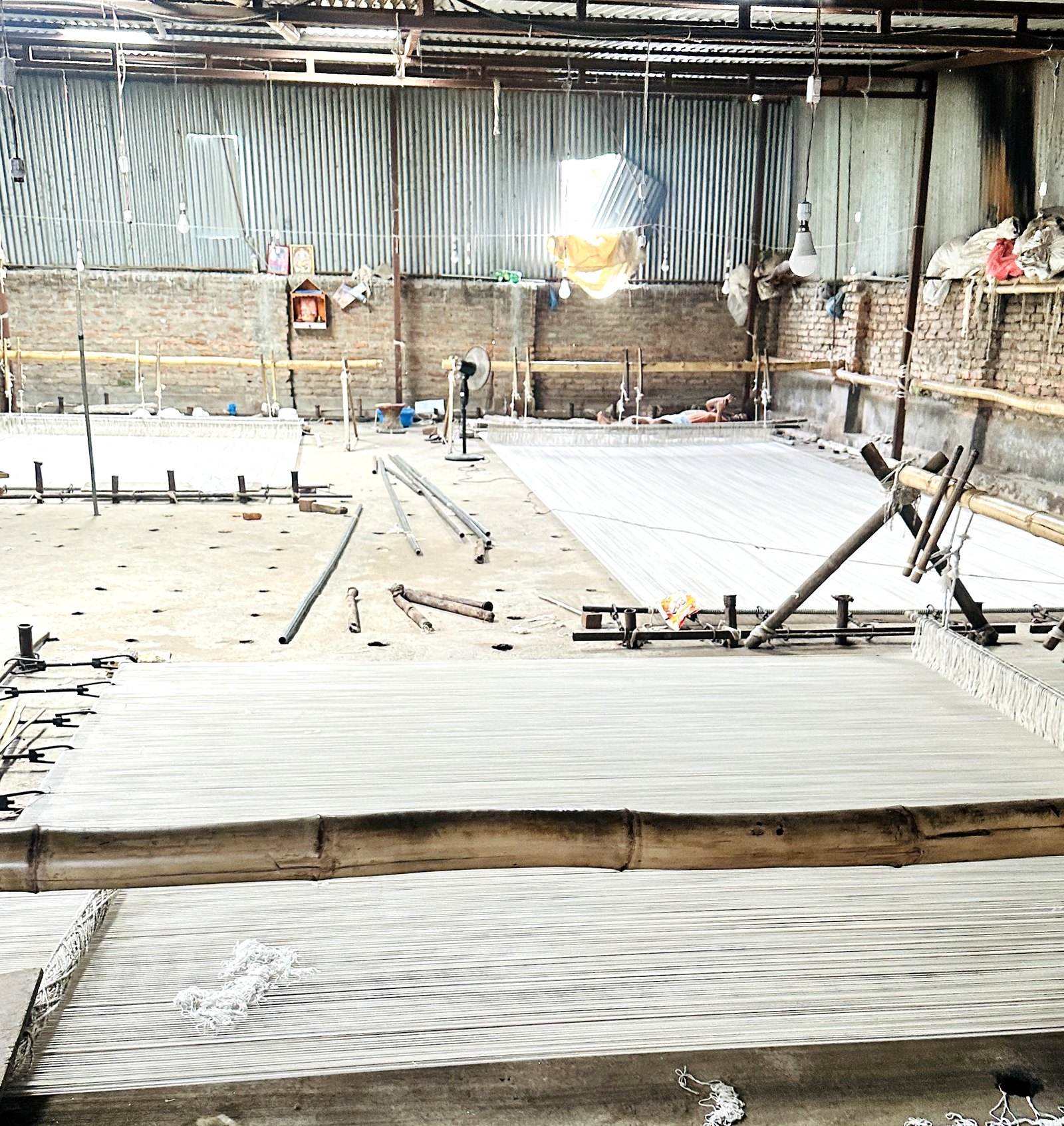

Weaving at the loom
Detail of a rug on the loom — warp tensioned, weft beaten down, the pattern growing a few centimetres a day.

Off the loom, weighed against the spec
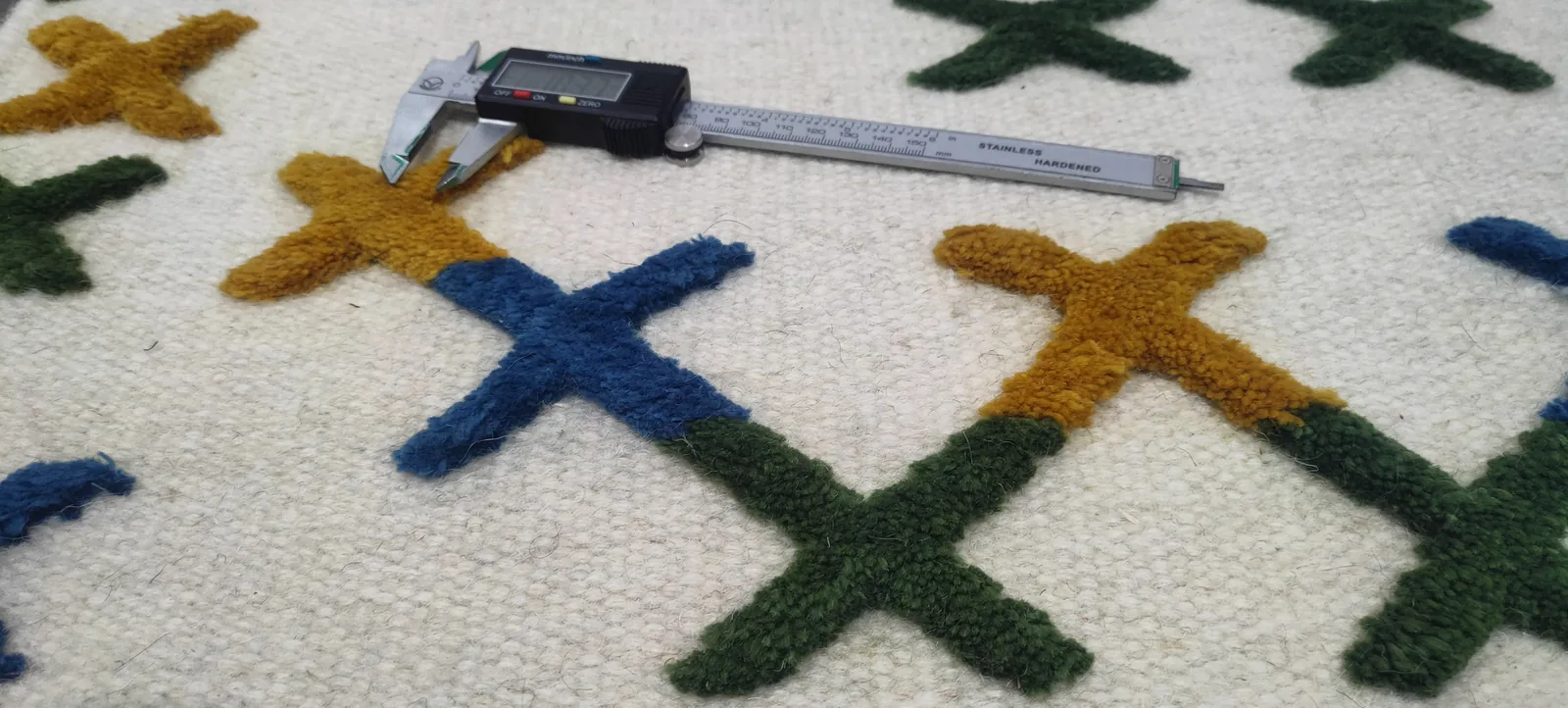
Finished pieces come off the loom and are received daily against slips. GSM is calculated and verified on every single piece — not sampled, every piece. Actual weight divided by actual area, against the specification.
[DEEP: need bazar receiving photo — weighing or measuring at receiving]
Water opens the pile
Water opens the pile and lifts the lustre once the weaving oils are gone. Rugs are washed flat and sun-dried.

Sun-dried, flat
Washed flat, then sun-dried — on frames or hung, depending on the piece.


Shear, stretch, bind — and carve
Stretching to true the shape, hand-binding the edges, and carving — the relief cut into the pile by hand, with scissors and carving tools, by several artisans working across one rug.


Measured, weighed, wrapped, shipped
Size against ±3% tolerance, weight and GSM against specification, finish against the approved sample. Then rolled, wrapped, labelled, and shipped — air out of IGI Delhi, sea out of Nhava Sheva, all Incoterms accepted.