
Every rug measured, skew checked at 1 inch
Length and width measured with a tape against both the SKU and the approved CAD, per piece, before packing. Size tolerance ±3%. Skew tolerance not more than 1 inch, checked on every rug — a specification most competitors do not publish.
How does PiHue verify rug size on every piece?
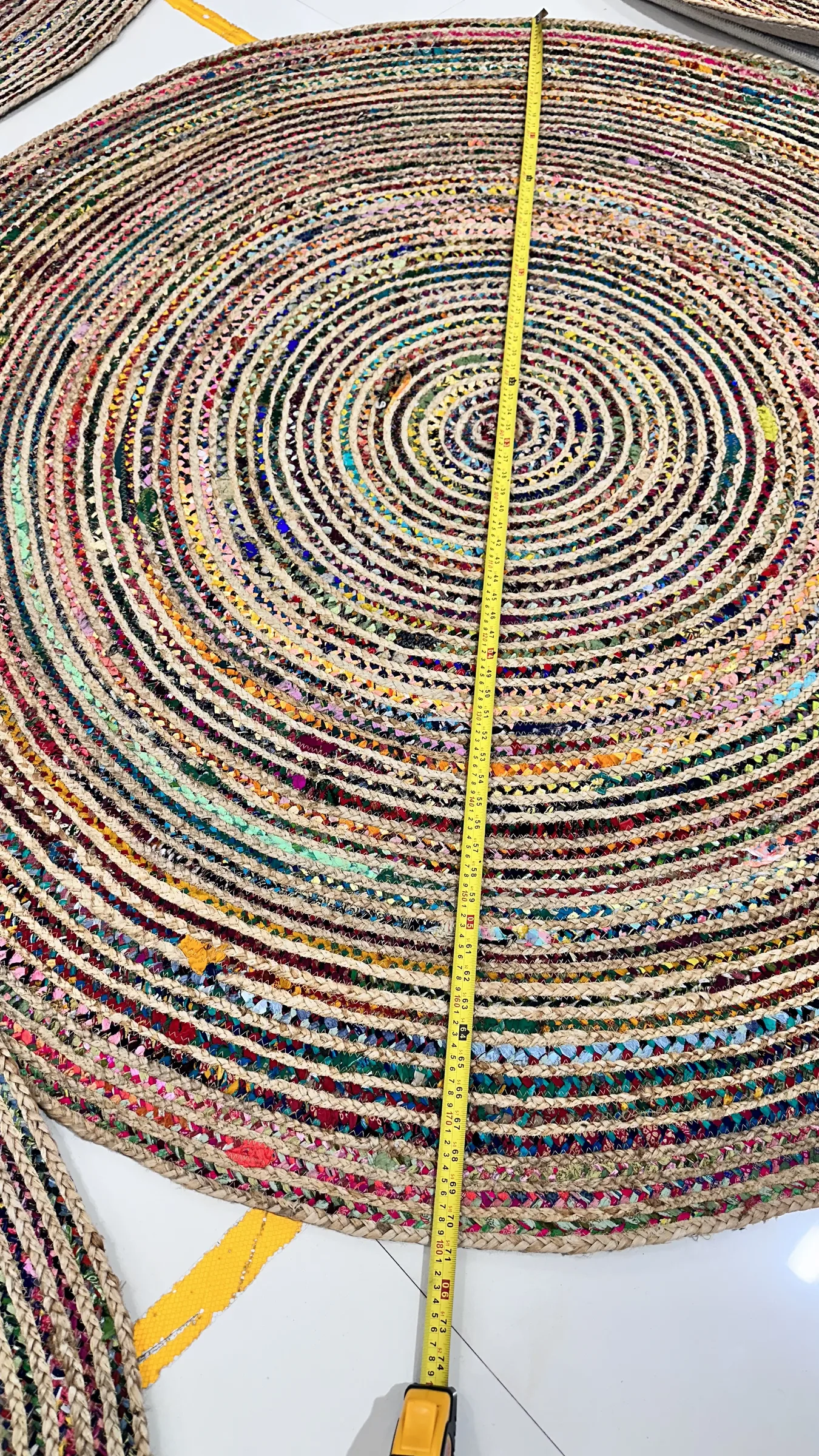
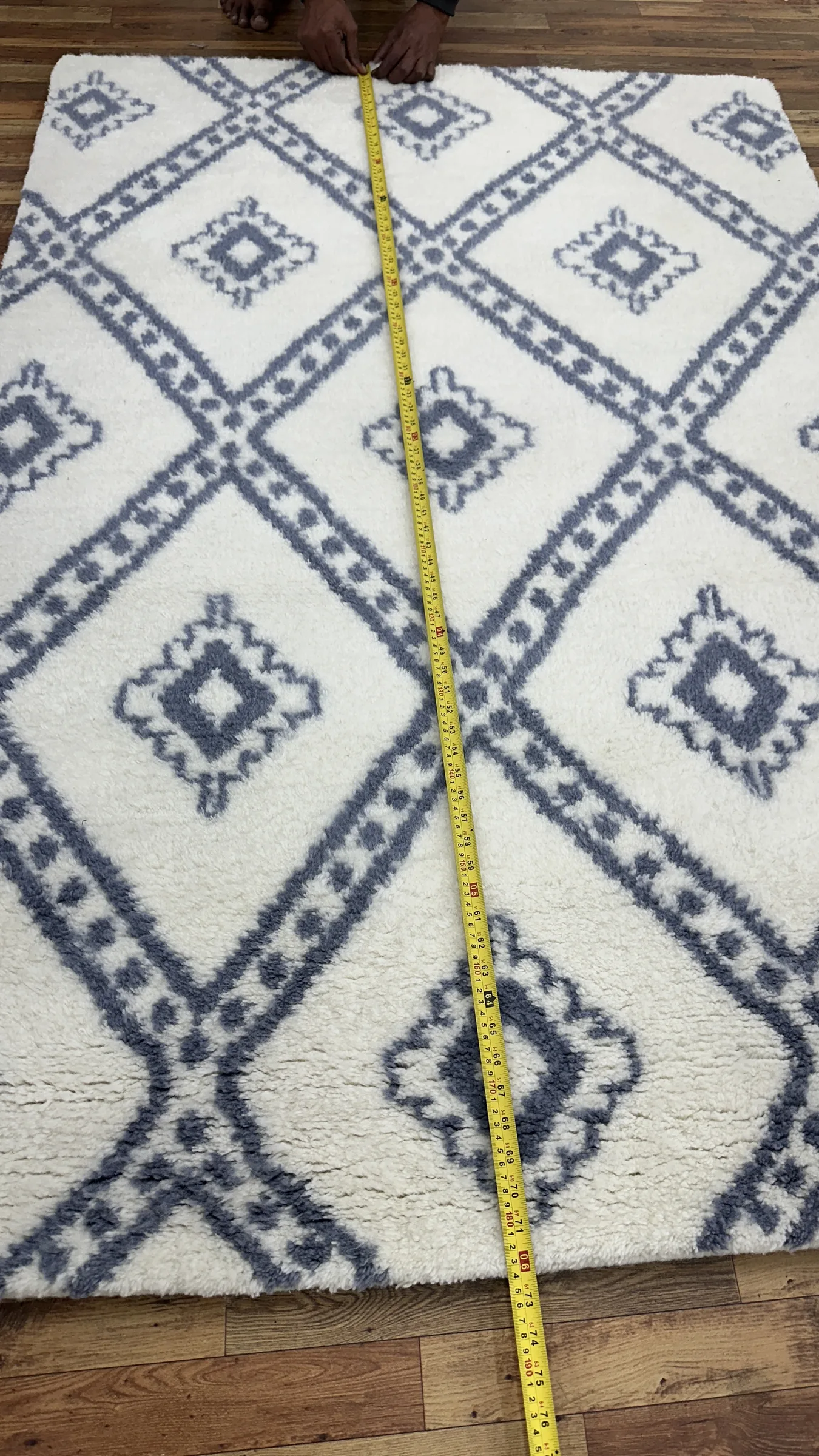
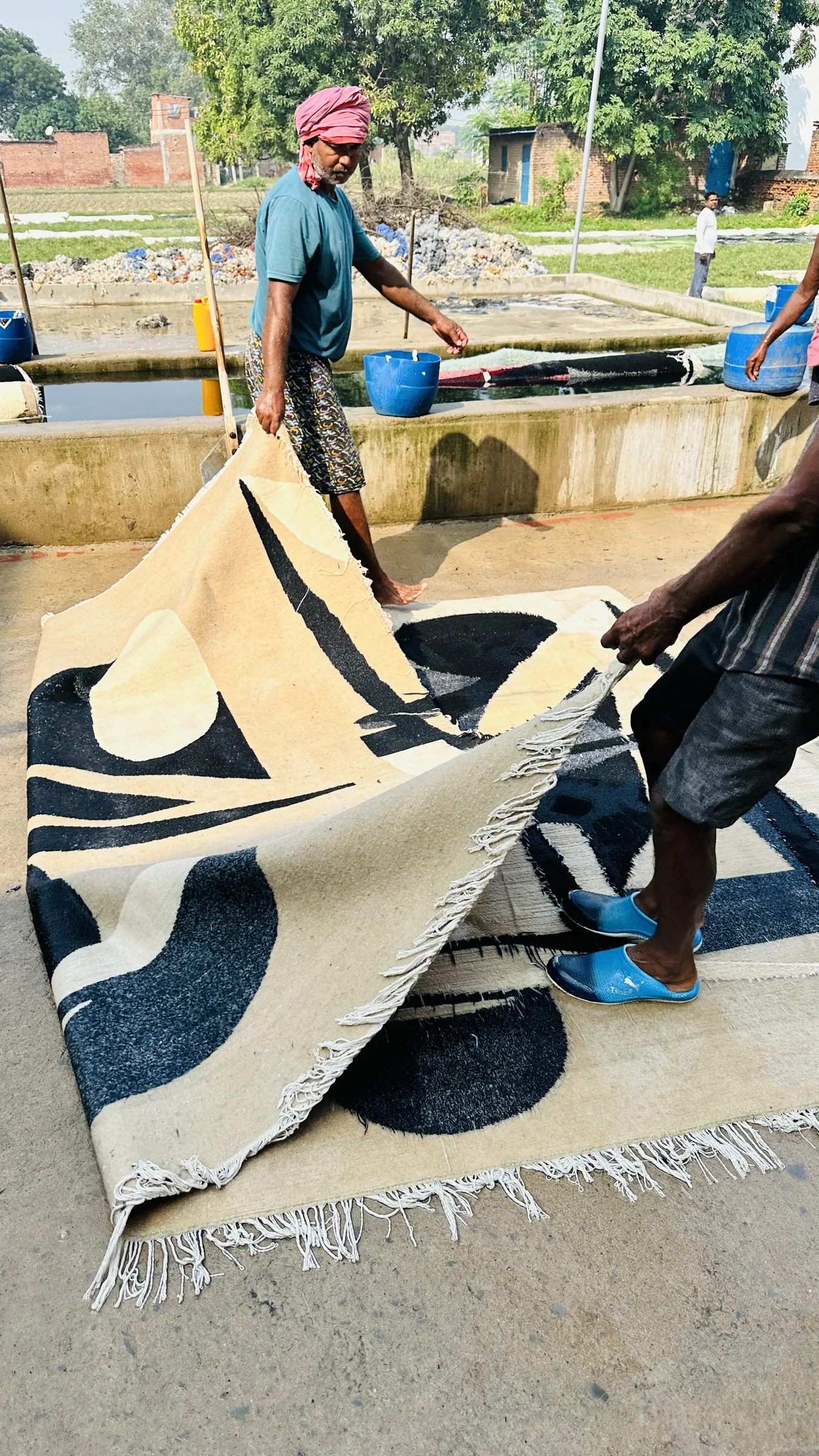
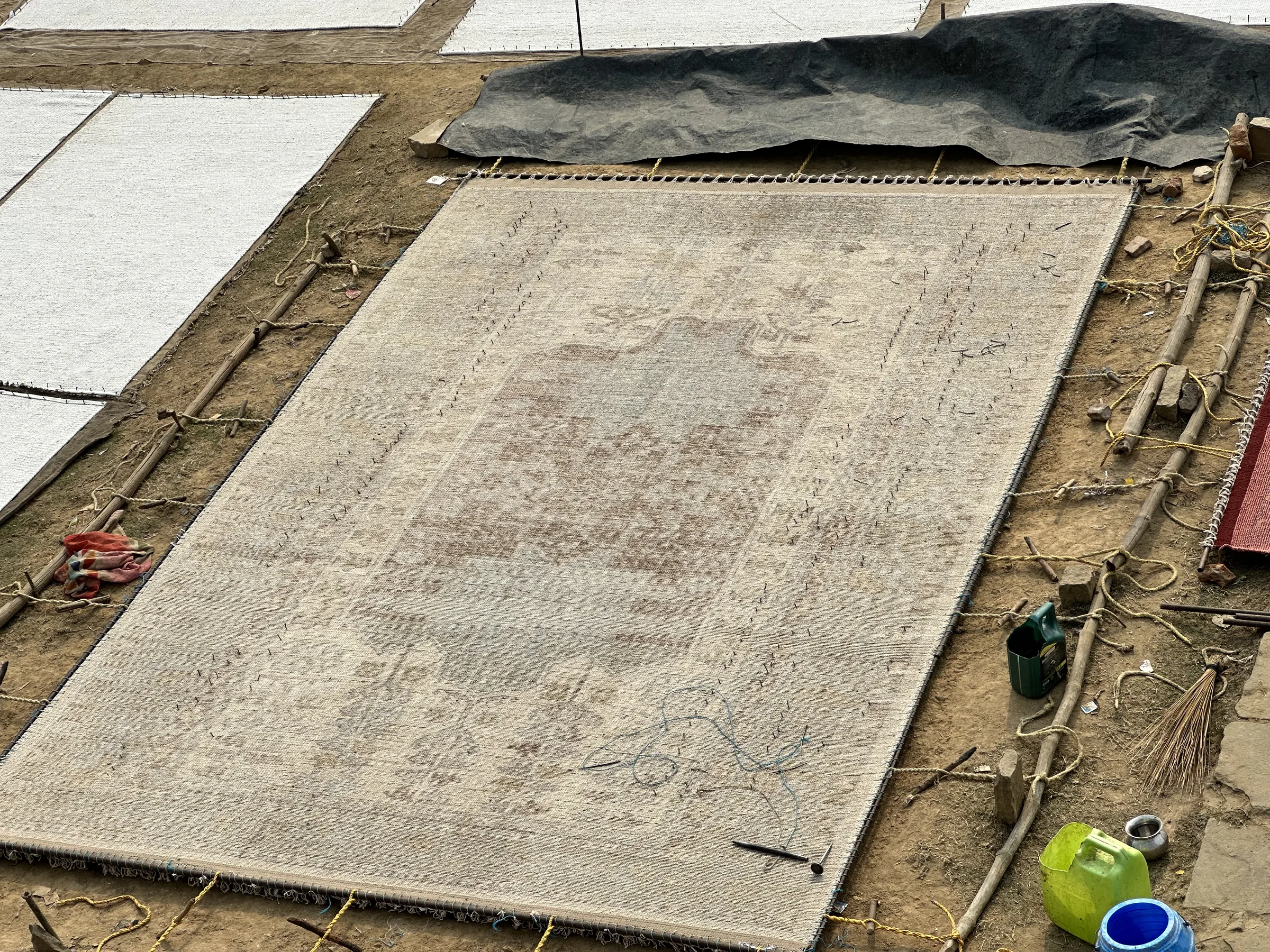
Length and width are measured with a tape on every finished rug and checked against both the SKU and the approved CAD, with a size tolerance of ±3%. Skew is checked on every rug at a tolerance of no more than 1 inch. Both measurements go on the same slip that carries the GSM check and follows the rug through washing, finishing and packing.
Publishing a skew tolerance is unusual. Most competitors publish a size tolerance and stop there, which leaves the question of whether the rug is actually square or rectangular unanswered. A rug that measures within ±3% on length and width can still be visibly skewed if the two diagonals diverge — the piece looks like a parallelogram, not a rectangle. The 1-inch skew tolerance, checked on every rug, is the discipline that catches this.
What is a size tolerance, and why does a handmade rug have one at all?
A handmade rug is woven on a wooden loom by hand, and every stage after weaving — washing, drying, stretching, binding — shifts the fabric slightly, so no two pieces finish at identical dimensions even from the same loom on the same day. The industry-accepted honest tolerance is ±3% on both length and width, and this is what PiHue commits to on the specifications page.
The physical causes:
- Weaver rhythm — on hand-knotted work, the beating force that packs each row of weft down varies slightly between weavers and across a single weaver's shift. Different beat densities mean different rows-per-inch, which cumulates over a full-height rug.
- Wet finishing shrinkage — wool shrinks in the wash; cotton warp shrinks slightly less; the differential causes small warp-vs-weft dimensional changes.
- Dry-stretching recovery — after wet finishing the rug is stretched on a frame to true its shape, but the stretch is set by eye and hand.
- Humidity uptake — wool absorbs moisture from the air; a rug measured in Bhadohi in the monsoon can differ slightly from the same rug in Dubai in July.
What is ±3% in centimetres, for common rug sizes?
For a 6 × 9 ft rug (1.83 × 2.74 m), ±3% translates to ±5.5 cm on the width and ±8.2 cm on the length — enough to matter under a fixed-position dining table, not enough to matter in an open floor plan. The tolerance is linear with size, so larger rugs finish with proportionally larger absolute tolerance.
| Nominal size | Tolerance in cm |
|---|---|
| 4 × 6 ft (1.22 × 1.83 m) | ±3.7 cm × ±5.5 cm |
| 6 × 9 ft (1.83 × 2.74 m) | ±5.5 cm × ±8.2 cm |
| 8 × 10 ft (2.44 × 3.05 m) | ±7.3 cm × ±9.1 cm |
| 9 × 12 ft (2.74 × 3.66 m) | ±8.2 cm × ±11.0 cm |
| 12 × 18 ft (3.66 × 5.49 m) | ±11.0 cm × ±16.5 cm |
What does the 1-inch skew tolerance mean in practice?
Skew is the difference in length between the two diagonals of the rug: a perfect rectangle has matching diagonals, a skewed rug has diagonals that differ. PiHue's tolerance is that no rug ships with more than 1 inch of skew — measured with the same tape used for the length and width check, on the same slip that carries the GSM check.
A skewed rug looks visibly off under fixed reference lines — a corridor with parallel walls, a lobby with a rectangular light pattern, a dining table with square edges. Under an open plan the human eye tolerates more skew than in a corridor. The 1-inch limit sits below the threshold where the eye starts to notice.
What happens if a piece is outside the size or skew tolerance?
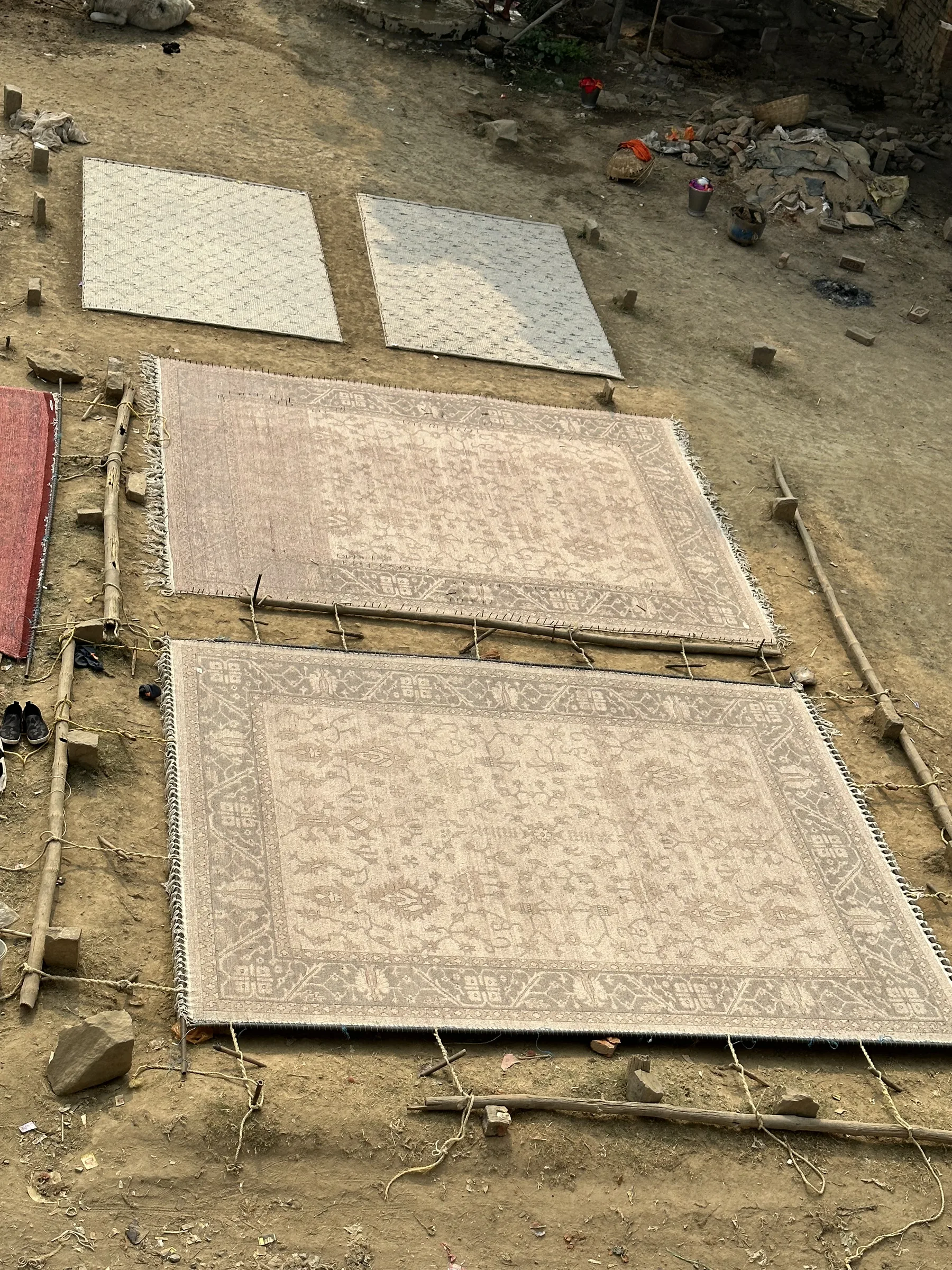
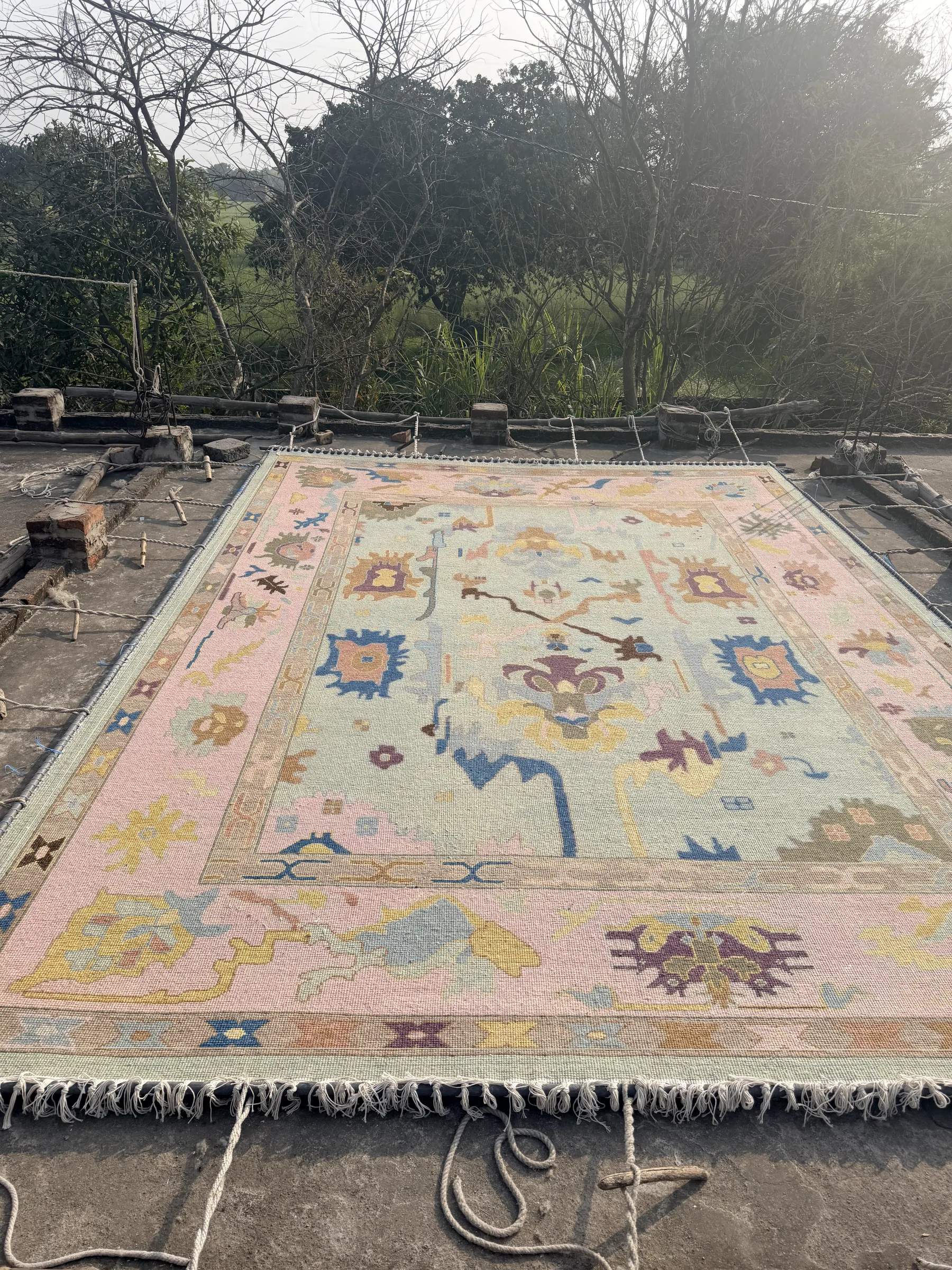
A piece outside ±3% on size or over 1 inch on skew is rejected at the receiving check and a replacement is made — the same discipline that applies to GSM. Handmade rug finishing includes a stretch step where a slightly out-of-size or slightly skewed piece can be trued back onto the frame; anything beyond what the stretch can recover is remade. The buyer sees only rugs that pass every check.
How does the size check interact with the CAD-approval stage?
The approved CAD is the reference the finishing floor measures against — a rug is checked at receiving against both the SKU (the finished-size specification on the PO) and the CAD (the digital file that generated the knot map). This double reference catches specifications where the SKU and the CAD disagree by a few millimetres — a common source of ambiguity on complex custom programmes, where the CAD may specify centimetres and the SKU may be a rounded ft-inch conversion.
What documentation does the buyer receive?
The QC slip lists width × length per rug, skew, net and gross weight, and the GSM check. Any dimension outside ±3% or skew above 1 inch means the piece is either re-stretched to spec or remade — the shipment does not include a piece that failed either check.
Frequently asked
What is PiHue's size tolerance on a handmade rug?
±3% on both length and width, checked against the SKU and the approved CAD, per piece, before packing. For a 6 × 9 ft rug that translates to ±5.5 cm × ±8.2 cm. The tolerance is linear with size.
Do you publish a skew tolerance?
Yes — 1 inch, checked on every rug. Skew is the difference in length between the two diagonals of the rug; a perfect rectangle has matching diagonals, a skewed rug looks visibly off under fixed reference lines like corridor walls or a rectangular light pattern. Publishing a skew tolerance is unusual in the industry.
Why do handmade rugs finish at ±3% rather than exact?
A handmade rug is woven on a wooden loom by hand, and every stage after weaving — washing, drying, stretching, binding — shifts the fabric slightly. Weaver rhythm, wet finishing shrinkage, dry-stretching recovery and humidity uptake all contribute. ±3% is the industry-accepted honest tolerance for a properly-finished handmade rug.
What happens if a piece is out of size or skew tolerance?
A piece outside ±3% on size or over 1 inch on skew is either re-stretched at finishing (if within recovery range) or rejected and remade — the buyer does not see a piece that failed either check. This matches the same rejection-and-remake discipline PiHue applies to GSM outside the ±5% tolerance.
How is size measured on the finished rug?
With a measuring tape, on the same QC bench that runs the GSM check. Length and width are recorded on the slip that follows the rug through washing, finishing and packing. The measurement is checked against both the SKU on the PO and the approved CAD that generated the knot map.
Does humidity change the finished size?
Slightly, yes — wool absorbs moisture from the air, so a rug measured in Bhadohi in the monsoon can read fractionally different from the same rug in a dry destination. The variation is well inside ±3%, and 24 hours' acclimatisation on arrival lets the rug equilibrate before final measurement or installation.
Send us your design. Quotation within hours.
A CAD, a sketch or a reference photo is enough — we return pricing, material options and a sampling plan the same working day.